Shenzhen Wandanan Precision Technology Co., Ltd Info@szwandaancnc.com


Views: 0 Author: Site Editor Publish Time: 2026-03-05 Origin: Site


CNC machining is the backbone of modern manufacturing, offering precision, flexibility, and efficiency across a wide range of industries. It allows manufacturers to produce complex parts with tight tolerances, quickly and consistently, making it an essential technology for industries like automotive, aerospace, electronics, and medical devices. The features of CNC machining provide numerous advantages, including enhanced part quality, reduced production time, and the ability to create highly intricate designs. In this article, we will explore the key features and advantages of CNC machining, focusing on its precision, material flexibility, automation, and surface finish capabilities.
One of the standout features of CNC machining is its ability to produce highly precise parts with tight tolerances. Precision and accuracy are critical in many industries, where even minor deviations can lead to defects or performance issues.
CNC machines are capable of achieving tight tolerances, often as small as ±0.01mm. This precision is achieved through computer-controlled operations, where each movement of the machine is dictated by G-code. This level of control ensures that each part produced meets exact specifications, making CNC machining ideal for industries such as aerospace, medical devices, and automotive components, where high precision is a necessity.
CNC machining offers excellent repeatability, meaning that parts produced in subsequent batches will be nearly identical. This consistency is crucial for mass production, where uniformity is required for product performance and quality. Once the design and settings are configured, the CNC machine can replicate the process as many times as needed, producing identical parts with minimal variance. This ensures that manufacturers can deliver large quantities of parts with the same level of quality and precision, reducing the need for additional inspection or rework.
One of the most attractive aspects of CNC machining is its ability to work with a wide variety of materials and produce complex geometries.
CNC machining is versatile in terms of the materials it can handle. It can be used to machine metals such as aluminum, steel, stainless steel, and titanium, as well as plastics like ABS, PEEK, and nylon. This flexibility allows manufacturers to choose materials that best suit the application, whether that’s for strength, weight, cost, or durability. CNC machining’s ability to handle both metals and plastics makes it an ideal choice for industries where different materials need to be combined or tailored to specific requirements.
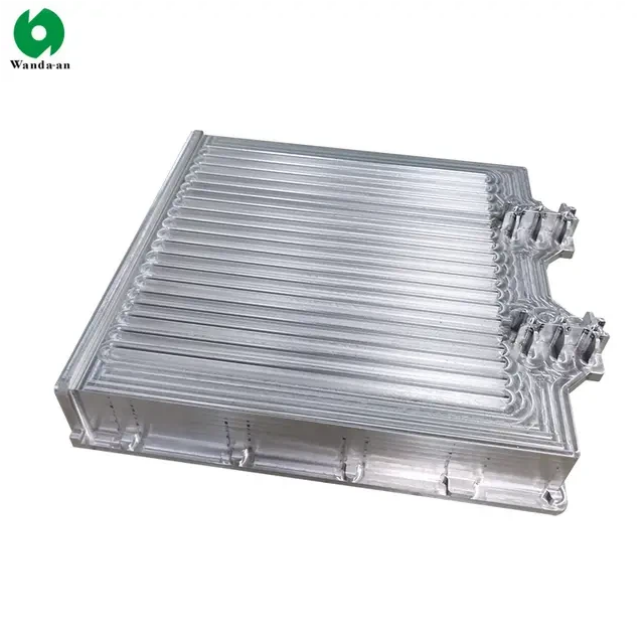
CNC machining excels at creating parts with intricate geometries that would be challenging or impossible to produce using traditional manual methods. From complex internal features like pockets and channels to intricate external shapes with precise curves and angles, CNC machines can produce highly detailed parts with ease. This capability is particularly important for industries like electronics, aerospace, and medical devices, where complex part shapes are often required for functionality or design.
Another benefit of CNC machining is its ability to achieve a variety of surface finishes. Whether you need a smooth, polished surface or a textured finish for enhanced grip or aesthetic appeal, CNC machines can achieve different levels of finish, such as anodizing, bead blasting, or electroplating. Custom finishes add value to parts, especially when they are used in consumer-facing products where appearance matters. CNC machining can be tailored to meet both functional and aesthetic requirements, providing a competitive edge in the marketplace.
When comparing CNC machining with traditional manual machining, the differences become clear. CNC machining provides several advantages in terms of precision, repeatability, and scalability.
Feature | CNC Machining | Manual Machining | Impact on Parts |
Precision | High | Moderate | Better fit/finish |
Repeatability | Excellent | Poor | Lower scrap |
Volumes | Prototype to large | Limited | Better scalability |
As shown in the table, CNC machining offers higher precision and repeatability compared to manual machining. Additionally, CNC machines can handle larger volumes, making them more scalable for mass production. This makes CNC machining the preferred choice for manufacturers who require high precision and efficiency.
One of the driving forces behind the success of CNC machining is the integration of automation and advanced control systems. These systems increase productivity, reduce human error, and ensure consistent quality across production runs.
CNC machines are often equipped with automatic tool changers (ATC), which allow the machine to switch between different tools during the machining process. This automation eliminates the need for manual tool changes, which saves time and reduces the potential for errors. The ability to quickly change tools enhances the machine’s efficiency, particularly in complex operations that require multiple tools for different processes, such as drilling, milling, and turning.
The software used to control CNC machines plays a crucial role in optimizing the machining process. Computer-Aided Manufacturing (CAM) systems generate toolpaths and G-code, which control the machine’s movements. Advanced CAM software can simulate the machining process, detect potential collisions, and optimize cutting strategies for faster production and reduced tool wear. The use of CAM software also helps streamline the process of converting CAD designs into executable instructions for CNC machines, improving both accuracy and efficiency.
As technology continues to advance, CNC machining is becoming increasingly automated. Future trends include the use of artificial intelligence (AI) to optimize machining processes, real-time monitoring for predictive maintenance, and fully automated production systems that require minimal human intervention. These advancements will further improve the efficiency, speed, and cost-effectiveness of CNC machining, enabling manufacturers to meet growing demands while maintaining high-quality standards.
CNC machining is not just about cutting parts to the right shape; it also allows for secondary operations such as surface finishing, which are crucial for both functional and aesthetic purposes.
Anodizing and electroplating are common post-machining processes used to improve the surface properties of metal parts. Anodizing creates a durable, corrosion-resistant surface layer on aluminum parts, while electroplating applies a thin coating of metal, such as gold or chrome, to a part for enhanced appearance or corrosion resistance. These finishes are especially useful in industries like electronics and automotive, where durability and aesthetics are essential.
Surface finishes not only enhance the part’s appearance but can also improve its functionality. For example, anodizing can increase wear resistance, while a textured finish can improve grip on handheld devices. CNC machining offers the flexibility to apply various surface finishes to meet the specific needs of the part, whether for functional performance, durability, or visual appeal.
The features of CNC machining are what make it the cornerstone of modern precision manufacturing. From its high level of precision and repeatability to its flexibility with materials and part geometry, CNC machining is unmatched in its ability to produce high-quality, complex components. The integration of automation and advanced control systems has made CNC machining even more efficient, reducing costs and lead times while ensuring that parts are produced with the highest standards of quality. SZWANDAAN, with its expertise in precision CNC machining, offers a wide range of solutions for industries such as automotive, aerospace, and electronics, helping businesses achieve the best results with cost-effective, high-performance machining solutions.
For more information about how SZWANDAAN can assist with your CNC machining needs, don’t hesitate to contact us today!
Q1: What makes CNC machining so precise?
A1: CNC machining achieves high precision through computer-controlled operations that minimize human error. The machines follow exact instructions generated from CAD and CAM software, ensuring tight tolerances and accurate dimensions.
Q2: How does CNC machining handle different materials?
A2: CNC machining is versatile and can handle a wide variety of materials, including metals like aluminum and stainless steel, and plastics such as ABS and nylon. The choice of material depends on the part's application and requirements.
Q3: What is the benefit of using automatic tool changers in CNC machines?
A3: Automatic tool changers save time by allowing CNC machines to switch between different tools during the machining process without human intervention, increasing production efficiency and reducing errors.
Q4: Can CNC machining be used for both small and large production runs?
A4: Yes, CNC machining is scalable and can be used for both small batch production and large-volume manufacturing. The precision and repeatability of CNC machines make them ideal for producing high-quality parts at any scale.


