Shenzhen Wandanan Precision Technology Co., Ltd Info@szwandaancnc.com


Views: 0 Author: Site Editor Publish Time: 2026-08-11 Origin: Site


Material selection in enclosure design carries high operational stakes. Premature failure from corrosion, structural fatigue, or thermal overload leads directly to catastrophic equipment downtime. Engineering and procurement teams must balance environmental protection requirements against strict constraints on weight, manufacturability, and project budgets. Standard mild steel serves as a common baseline for controlled indoor applications. Harsh environments, however, demand an immediate upgrade to more resilient materials. This guide provides an objective, engineering-driven framework for evaluating an aluminum versus stainless steel metal enclosure for your next project. We strip away assumptions to focus purely on application-specific realities. You will learn how to match material properties to field conditions, ensuring you specify the exact housing required for long-term reliability without over-engineering the solution.
Weight vs. Strength Trade-off: Aluminum provides a superior strength-to-weight ratio, making it mandatory for pole-mounted or portable applications, while stainless steel delivers unmatched absolute tensile strength, impact resistance, and internal load-bearing capacity.
Corrosion Resistance Nuances: Both materials resist corrosion without the need for painted finishes (unlike mild steel). However, stainless steel (specifically 316L) is required for caustic, highly acidic, or constant saltwater washdown environments, whereas aluminum relies on natural oxidation or anodizing for standard outdoor protection.
Thermal Dynamics & Shielding: Aluminum significantly outperforms stainless steel in thermal conductivity, acting as a natural heat sink, and offers superior natural EMI/RFI shielding for sensitive electronics.
Defining the environmental baseline is the critical first step in material selection. You must identify specific NEMA or IP requirements dictated by the installation site before looking at metal alloys. NEMA 3R provides basic outdoor protection against rain and ice. NEMA 4 and 4X demand watertight seals and, in the case of 4X, strict corrosion resistance. IP65 and IP66 ratings dictate exact tolerances against dust ingress and high-pressure water jets. Establishing these baseline protection levels narrows your material choices immediately.
Structural and load constraints dictate the physical architecture of the unit. Determine if the housing will be wall-mounted, pole-mounted, floor-standing, or subjected to heavy industrial vibration. You must calculate the physical weight of all internal components. Heavy transformers, large variable frequency drives, and battery backups exert massive point loads on mounting panels. The enclosure walls must support this static weight without warping, bowing, or compromising the door seals over a twenty-year lifespan.
Internal thermal and electrical loads require precise calculation. You must determine the total heat dissipation requirements of the housed electrical components in watts. This calculation dictates whether passive cooling is sufficient or if active cooling systems are necessary. Furthermore, assess the specific need for electromagnetic interference (EMI) or radio frequency interference (RFI) shielding. High-frequency electronics demand materials that can attenuate these disruptive signals effectively.
Mapping out lifecycle expectations ensures long-term reliability. Define the required operational lifespan for the installation. Determine the acceptable maintenance intervals for the site. Remote locations require materials that survive decades with zero maintenance. Acceptable degradation levels vary wildly between a pristine pharmaceutical plant and a rugged mining operation. Your material choice must align directly with these lifecycle demands.
Audit the ambient environment for airborne corrosives, salt spray, and extreme temperature fluctuations.
Calculate the total static weight of all internal components to determine load-bearing requirements.
Determine the thermal dissipation needs by calculating the total wattage of heat generated by internal electronics.
Define the maintenance lifecycle and accessibility of the installation site.
Identify any municipal or structural weight limits for the mounting location.
| Environmental Threat | Recommended NEMA Rating | Typical Material Choice |
|---|---|---|
| Basic Outdoor Weather (Rain, Sleet) | NEMA 3R | Aluminum or Powder-Coated Steel |
| Windblown Dust and Splashing Water | NEMA 4 | Aluminum or 304 Stainless Steel |
| Corrosive Agents and Hose-Directed Water | NEMA 4X | 304 or 316L Stainless Steel |
| Submersion (Temporary) | NEMA 6 | 316L Stainless Steel |
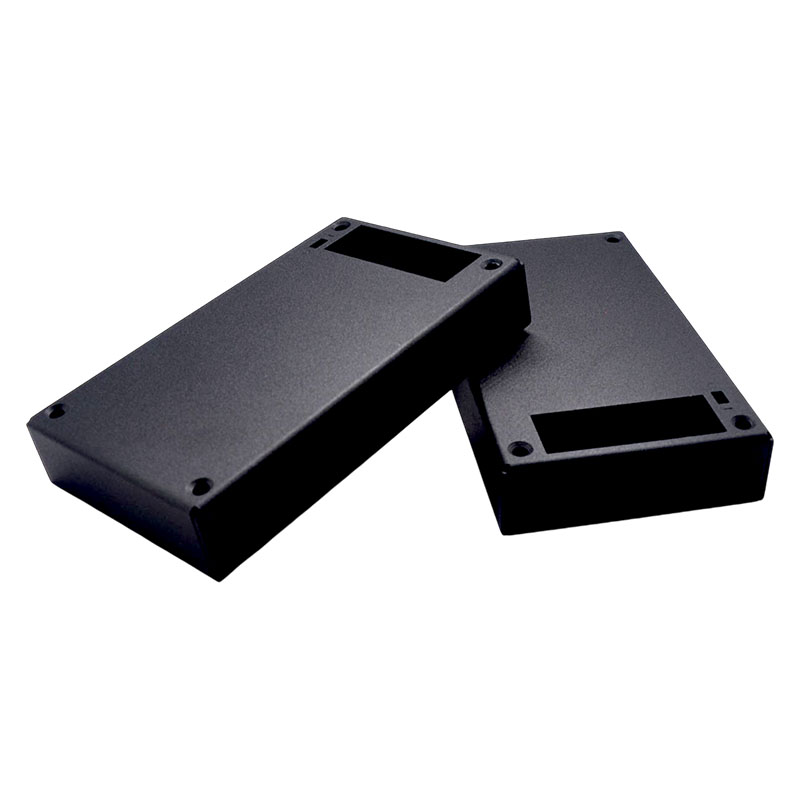
Fabricators commonly utilize 5052-H32 aluminum for enclosure construction. This specific alloy blends magnesium and chromium, offering excellent baseline mechanical properties and high workability. It resists marine atmospheres well and accepts tight bend radii on a press brake without cracking. The material profile of aluminum makes it a highly versatile choice for diverse engineering challenges, particularly when weight reduction is the primary design constraint.
The primary advantages of aluminum center on its physical properties. It boasts an exceptional strength-to-weight ratio. Aluminum weighs roughly one-third as much as steel, drastically reducing structural strain on mounting points. High thermal conductivity allows the entire housing to act as a passive heat sink. Excellent natural electrical conductivity provides superior EMI/RFI shielding. Furthermore, its non-magnetic properties benefit specific electronic applications where magnetic interference degrades performance.
Ideal applications leverage these exact properties. Pole-mounted telecom cabinets rely on aluminum to meet strict municipal weight limits on utility poles. Aerospace and marine applications utilize the material extensively, often applying secondary coatings for extreme saltwater exposure. Portable test equipment requires the massive weight reduction aluminum provides. Solar inverter housings benefit from both the low weight and the natural heat dissipation capabilities of an aluminum enclosure.
Despite its strengths, aluminum carries specific limitations. It possesses lower absolute impact resistance compared to steel. Blunt force from a forklift or heavy machinery is more likely to dent the surface. Engineers often require up-gauging, which means specifying thicker sheet metal, to match the rigid feel of a steel unit. Additionally, aluminum remains highly susceptible to galvanic corrosion. If improperly mated with dissimilar metals like carbon steel fasteners in the presence of an electrolyte, the aluminum will rapidly degrade.
Manufacturing relies on two primary grades of stainless steel for industrial housings. Grade 304 serves as the standard industrial workhorse, providing excellent general-purpose protection against water and mild chemicals. Grade 316 and its low-carbon variant, 316L, include an addition of 2% to 3% molybdenum. This specific alloying element vastly improves resistance to pitting from chlorides, making it the mandatory marine and caustic grade material.
The primary advantages of stainless steel stem from its sheer durability. It delivers superior tensile strength and high-impact resistance. This provides exceptional weight capacity for supporting heavy internal components like large variable frequency drives and step-down transformers. Unmatched chemical and corrosion resistance combats harsh cleaning agents and continuous moisture. A high melting point offers better structural performance in extreme high-temperature environments or localized fire events.
Ideal applications for this material involve extreme environmental abuse. Food and beverage processing facilities require daily sanitary washdowns with caustic chemicals like sodium hydroxide. Wastewater treatment plants expose equipment to highly corrosive hydrogen sulfide gas. Oil and gas refineries demand maximum structural integrity to protect critical control systems. Highly trafficked public infrastructure relies on a stainless steel enclosure to resist vandalism and severe weather simultaneously.
The limitations of stainless steel are primarily logistical and thermal. The heavy weight complicates mounting procedures and increases the physical strain on installation crews. Poor thermal conductivity traps internal heat generated by electronics, often necessitating active cooling systems. The material is notoriously difficult to machine. It causes rapid tooling wear and requires slower cutting speeds, which extends fabrication timelines.
Comparing mechanical metrics reveals distinct structural differences. 5052-H32 aluminum offers a yield strength of approximately 193 MPa. Grade 304 stainless steel provides a yield strength of roughly 215 MPa, but with a significantly higher ultimate tensile strength. Stainless steel handles massive internal point loads without warping or stressing the welded seams. When you mount a 100-pound transformer to a back panel, stainless steel resists bowing far better than aluminum.
Engineers must utilize gauge compensation when designing with aluminum. To achieve the same structural rigidity as a 14-gauge stainless steel unit, you must often specify 0.125-inch (roughly 11-gauge) aluminum. This up-gauging impacts the internal volume slightly and alters the bend deductions required during fabrication. You cannot simply swap materials in a CAD file without recalculating the flat patterns.
Deformation under impact varies drastically between the metals. Aluminum tends to dent under blunt force. It absorbs the impact energy through localized deformation. Stainless steel resists deformation entirely. However, this rigidity transfers the shockwave directly to internal mounts, potentially damaging sensitive electronics housed inside. Vibration tolerance is critical for heavy industrial or transit applications. Stainless steel handles low-frequency, high-amplitude vibration with minimal fatigue. Aluminum performs well but requires careful attention to weld joints and fastener selection to prevent fatigue cracking over extended operational lifespans.
Weight creates cascading effects on surrounding infrastructure. A heavy stainless steel unit requires reinforced mounting hardware. Pole-mounted steel units demand heavier gauge poles, heavy-duty banding, and deeper concrete footings to handle the increased wind load and dead weight. Aluminum simplifies this infrastructure requirement entirely, allowing for faster deployments on existing structures.
Logistics become significantly more complex with heavier steel units. Moving large stainless steel cabinets requires specialized rigging, forklifts, and heavy-duty transit solutions. Aluminum cabinets of the same dimensions can often be maneuvered by smaller crews with standard equipment. This streamlines the installation process and reduces the heavy machinery required on the job site.
The mechanism of protection differs fundamentally between the materials. Aluminum relies on a natural aluminum oxide layer that forms instantly upon exposure to air. This microscopic layer halts further oxidation. Stainless steel utilizes a chromium oxide passive layer. When scratched, both materials self-heal their protective layers in the presence of oxygen, provided the environment is not overly contaminated.
Performance in specific environments dictates the final specification. Salt spray in marine settings aggressively attacks 304 stainless and standard aluminum, demanding 316 stainless steel. Acidic or alkaline exposure in chemical plants requires similar resilience. UV degradation destroys non-metallic enclosures, but both aluminum and stainless steel remain completely immune to sunlight exposure, making them ideal for desert deployments.
Secondary finishes enhance baseline protection. Aluminum frequently receives anodizing or powder coating to increase surface hardness and aesthetic appeal. Stainless steel undergoes passivation, a chemical process using citric or nitric acid baths that removes free iron from the surface. This maximizes the effectiveness of its chromium oxide layer and prevents surface rust.
Thermal conductivity metrics highlight a massive performance gap. Aluminum operates at approximately 167 W/m·K. Stainless steel operates at a dismal 15 W/m·K. Aluminum transfers heat rapidly from the inside of the cabinet to the outside air. Stainless steel acts almost as an insulator, trapping generated heat inside the sealed box.
Material choice directly impacts secondary cooling requirements. The trapped heat inside a steel unit often pushes internal temperatures past the failure point of electronics. This necessitates fans, heat exchangers, or active HVAC units. Aluminum acts as a natural heat sink. Engineers often rely entirely on passive cooling strategies when using aluminum, eliminating the failure risks associated with mechanical cooling fans.
Electrical conductivity translates directly to shielding effectiveness. High conductivity allows a material to absorb and redirect electromagnetic waves. Aluminum possesses significantly higher electrical conductivity than stainless steel. This makes it highly effective at attenuating both electromagnetic interference (EMI) and radio frequency interference (RFI) across a broad spectrum of frequencies.
Engineers frequently choose aluminum over stainless steel for housing sensitive telecommunications and computing hardware. The natural shielding properties of aluminum prevent external radio frequencies from corrupting internal data streams. It also prevents internal signals from leaking out and interfering with nearby equipment, ensuring compliance with strict FCC emissions standards.
Tooling requirements and cutting speeds define the fabrication timeline for a custom metal enclosure. Aluminum features a softer composition and high workability. CNC punches and fiber lasers cut through aluminum rapidly. Drilling and tapping operations proceed at high speeds with minimal tool wear, allowing fabricators to turn around complex designs quickly.
Welding and machining stainless steel present distinct challenges. The material is highly susceptible to work hardening. If a drill bit rubs without cutting, the steel hardens instantly, destroying the tool. Welding stainless steel requires specialized shielding gases, such as argon mixtures, and precise heat control. Excessive heat input during TIG welding warps the metal and burns out the protective chromium layer, leading to premature rust at the weld seams.
| Technical Property | 5052-H32 Aluminum | 304 / 316 Stainless Steel |
|---|---|---|
| Density / Weight | ~2.68 g/cm³ (Lightweight) | ~8.00 g/cm³ (Heavy) |
| Tensile Strength | Moderate (Requires thicker gauge) | Extremely High (Exceptional rigidity) |
| Thermal Conductivity | ~167 W/m·K (Excellent heat sink) | ~15 W/m·K (Traps internal heat) |
| Corrosion Resistance | High (Vulnerable to galvanic corrosion) | Supreme (316 resists harsh chlorides) |
| Machinability | High (Fast cutting, low tool wear) | Low (Work hardens, high tool wear) |
| EMI/RFI Shielding | Excellent (High electrical conductivity) | Moderate (Lower electrical conductivity) |
Galvanic corrosion represents a severe implementation risk. When aluminum contacts a dissimilar metal like carbon steel in the presence of moisture, the aluminum acts as an anode and corrodes rapidly. You must mitigate this risk strictly. Use dielectric isolators, nylon washers, or specific neoprene gaskets when mounting aluminum units to steel structures. Never use bare carbon steel fasteners on an aluminum chassis; always specify stainless steel or zinc-plated hardware with proper isolation.
Over-specifying material leads to massive project bloat. Defaulting to 316 stainless steel for every project is a common engineering error. If the installation environment only dictates a NEMA 3R rating for basic rain protection in a temperate climate, stainless steel is entirely unnecessary. Conduct a strict environmental audit. Match the material precisely to the actual threats present at the installation site to keep the project viable.
Thermal failure of internal components remains a constant threat, particularly with steel housings. Trapped heat degrades capacitors and causes variable frequency drives to fault. You must run thermal modeling during the design phase. Calculate the internal heat load and ensure the chosen sheet metal enclosure can dissipate that heat. Implement louvers, fans, or heat exchangers if passive dissipation falls short of the required cooling metrics.
Evaluating a fabrication partner requires looking beyond basic cutting capabilities. You need a partner with robust in-house engineering support. They should utilize automated laser cutting and CNC punching equipment to ensure tight dimensional tolerances. Certified welding is absolutely critical. Ensure the facility holds AWS D1.2 certification for aluminum welding and AWS D1.6 certification for stainless steel welding. Poor welding destroys the structural integrity and corrosion resistance of both materials.
Prototyping and design-for-manufacturability (DFM) reviews separate standard job shops from true manufacturing partners. A rigorous DFM process optimizes your chosen material. Engineers will review your gauge thickness, bend radii, and shielding requirements before full-scale production begins. Working with an experienced electrical enclosure manufacturer ensures your design translates perfectly from CAD software to physical reality, eliminating costly revisions on the factory floor.
Neither material is universally superior. The choice is strictly dictated by the intersection of environmental severity, weight limits, internal load capacity, and thermal dynamics. Aluminum excels in weight reduction and thermal management. Stainless steel dominates in raw strength and chemical resistance. Default to an aluminum housing for weight-restricted, high-heat, EMI-sensitive, or highly customized applications. Default to a stainless steel housing for extreme impact risk, heavy internal components, sanitary washdown requirements, or highly corrosive chemical environments.
Take the following steps to finalize your specification:
Audit your installation site to determine the exact NEMA or IP rating required.
Calculate the total static weight and thermal output of all internal components.
Consult with a mechanical engineer to run thermal modeling on your preliminary design.
Request a physical prototype to validate structural integrity and mounting hardware compatibility before full production.
A: It depends on the specific environment. Aluminum excels in standard outdoor applications due to its natural oxide layer and light weight. Stainless steel becomes mandatory for highly corrosive environments, such as coastal marine areas or chemical plants, where extreme durability against chlorides is required.
A: No. Aluminum contains no iron, so it cannot rust. It forms a natural oxide layer immediately upon exposure to oxygen, which halts further environmental corrosion. Fabricators frequently apply powder coating or anodizing strictly for aesthetic purposes or to provide an extra layer of surface hardness.
A: Stainless steel possesses a higher density and greater tensile strength, causing rapid tool wear. It also work-hardens rapidly during machining. If a drill bit rubs without cutting, the material hardens instantly. This requires slower cutting speeds, specialized tooling, and highly rigid CNC setups.
A: Yes, but it requires careful structural engineering. Because aluminum has a lower yield strength than steel, the chassis must utilize thicker material gauges. Engineers also design internal reinforcing brackets or sub-panels to distribute heavy point loads, preventing the walls from warping under the static weight.
A: Aluminum provides superior electromagnetic interference (EMI) and radio frequency interference (RFI) shielding. Its high electrical conductivity allows the metal to absorb and redirect electromagnetic waves much more effectively than stainless steel. This makes it the standard choice for housing sensitive telecommunications and computing hardware.
A: Grade 304 is the standard industrial stainless steel, offering excellent general-purpose corrosion resistance. Grade 316 contains an addition of 2% to 3% molybdenum. This specific alloying element drastically improves the metal's resistance to pitting and crevice corrosion, particularly in environments exposed to harsh chlorides or saltwater.


