Shenzhen Wandanan Precision Technology Co., Ltd Info@szwandaancnc.com


Views: 0 Author: Site Editor Publish Time: 2026-08-04 Origin: Site


You send the exact same CAD file to five different machine shops and get five vastly different quotes. Identical designs can yield price differences exceeding 300% across vendors. Procurement and engineering teams struggle to balance strict tolerance requirements against tight budget constraints. You often lack visibility into how specific design choices, geographic sourcing, and secondary operations exponentially drive up the final number. Without a clear understanding of these variables, you risk overpaying for simple parts or receiving substandard quality from low-ball quotes. We need a transparent framework for evaluating these expenses. You must understand baseline hourly rates and identify hidden cost drivers. Applying Design for Manufacturability (DFM) principles helps optimize projects without sacrificing quality. Understanding the core elements of cnc machining cost allows you to make informed sourcing decisions and keep production on track.
Hourly Rate Variance: Standard 3-axis milling typically ranges from $20 to $75 per hour, while complex 5-axis machining commands $40 to $250+ per hour. This massive spread is heavily dependent on geographic region (offshore vs. domestic), shop overhead, and operator expertise.
The Machinability Multiplier: Raw material price is secondary to a material's machinability index; harder materials increase tool wear and cycle times, driving up overall costs.
Economies of Scale: Setup and fixturing represent fixed costs. Increasing batch sizes for OEM machining parts drastically reduces the per-unit price by amortizing these initial expenses across the production run.
DFM Impact: Minor design adjustments—such as adding radii to internal vertical edges, designing for single-setup machining, and eliminating engraved text—can reduce machining time and costs by up to 30%.
Let us dive into the shop floor reality. When you request a quote from a precision machining service, the baseline hourly rate dictates the foundation of your costs. You must understand how shops calculate these rates to evaluate your quotes accurately. These rates vary wildly based on machine type, geographic location, and facility overhead.
A standard 3-axis vertical machining center (VMC) handles flat parts, simple brackets, and basic hole patterns. The spindle moves in X, Y, and Z coordinates. Because these machines are ubiquitous and relatively straightforward to program, they carry lower baseline hourly rates. The operator clamps a block of aluminum in a standard six-inch Kurt vise. They touch off the tools, set the work offset, and hit cycle start. The barrier to entry is low, and the programming time is minimal.
Now look at a 5-axis trunnion machine. The capital investment jumps massively. You pay for simultaneous movement across five axes, allowing the cutter to reach complex undercuts and compound angles without manual intervention. The programming requires advanced CAM software and collision simulation. If a programmer makes a mistake on a 3-axis mill, you break an end mill. If they crash a 5-axis machine, you destroy a spindle worth tens of thousands of dollars. Shops charge a premium to cover this risk, the expensive software seats, and the highly skilled machinists required to run the equipment safely. However, for complex geometries, the higher hourly rate pays for itself by drastically reducing setup times.
Location changes the math entirely. Offshore facilities operate with lower labor rates and different regulatory environments, allowing them to offer highly competitive baseline rates. Domestic shops face severe skilled labor shortages. Finding a machinist who can program macro variables, troubleshoot complex G-code, and optimize toolpaths is difficult. Shops have to pay top dollar to retain that talent, and they pass those labor costs into their hourly shop rate.
Overhead extends far beyond rent and electricity. It includes facility certifications and quality management systems. Maintaining an AS9100 certification for aerospace work requires dedicated quality managers, rigorous documentation, calibrated inspection equipment, and frequent third-party audits. Rigorous machine maintenance schedules ensure high precision but add to the shop's operating expenses. You absorb these infrastructure costs in the hourly rate.
A standard manufacturing quote contains multiple hidden variables. Deconstructing these elements reveals exactly where your budget goes. Machining time, material properties, and part complexity dictate the final number far more than the raw material weight.
Raw material cost is just the starting point. Aluminum 6061 is cheap and cuts like butter. You can run high spindle speeds and aggressive feed rates. The chips evacuate easily, and tool wear is practically non-existent. You get parts off the machine quickly.
Switch to 304 Stainless Steel, and the situation changes. It work-hardens if you let the tool rub instead of cut. You have to slow down the spindle and maintain a heavy chip load. The tools wear out faster, requiring frequent changes. Switch to Titanium Grade 5, and the difficulty multiplies. Titanium dissipates heat poorly. The heat transfers directly into the cutting tool instead of the chip. You must use specialized carbide end mills with specific coatings. You run the machine much slower. A part that takes ten minutes in aluminum might take an hour in titanium. The extended cycle time and the cost of replacing worn end mills drive the price up exponentially.
| Material Type | Machinability Index | Tool Wear Impact | Chip Evacuation | Relative Cost Multiplier |
|---|---|---|---|---|
| Aluminum (6061-T6) | Excellent | Minimal | Excellent | 1.0x (Baseline) |
| Brass (360) | Excellent | Minimal | Excellent | 1.1x |
| Delrin (Acetal) | Excellent | Minimal | Good | 1.2x |
| Stainless Steel (304) | Moderate | Moderate to High | Fair | 2.5x |
| Stainless Steel (17-4 PH) | Fair | High | Fair | 3.0x |
| Titanium (Grade 5) | Poor | Severe | Poor | 4.5x+ |
Part geometry dictates the machining strategy. A flat plate with a few holes requires one setup. A complex manifold with intersecting cross-holes requires multiple setups. Every time the operator opens the doors, blows off the chips, unclamps the part, flips it, and re-indicates the new datum, you lose money. Manual intervention kills efficiency.
Thin walls cause major headaches on the shop floor. If you design a wall that is 0.020 inches thick, the pressure from the cutting tool causes the material to flex and vibrate. We call this chatter. To prevent chatter, the machinist has to take multiple light passes instead of one heavy roughing pass. This adds massive amounts of time. Deep pockets present similar issues. Standard end mills have a flute length roughly three times their diameter. If you need a pocket that is ten times deeper than the tool diameter, the machinist uses a reduced-neck extended-reach tool. These tools deflect easily. You have to drop the feed rate to a crawl to maintain dimensional accuracy.
Tight tolerances destroy budgets. Standard machining tolerances usually sit around +/- 0.005 inches. Most modern CNC machines hit that all day long with standard tooling and minimal operator intervention.
When you specify +/- 0.0005 inches, everything changes. The machinist accounts for tool deflection, thermal expansion of the machine casting, and even the temperature of the coolant. They might rough the part, let it sit to relieve internal material stresses, and then come back for a final finish pass. They stop the machine frequently to measure the part with a bore gauge or micrometer. Geometric Dimensioning and Tolerancing (GD&T) callouts like true position or flatness also inflate costs. A tight true position callout on a hole pattern requires the machinist to bore the holes rather than just drill and ream them. Boring takes significantly longer. If the tolerance is too tight for a mill, the shop moves the part to a precision grinder, adding an entirely new operation.
Machining is only half the battle. Post-processing adds time and logistical overhead. Heat treating changes the grain structure of the metal to increase hardness. Anodizing creates a protective oxide layer on aluminum. Electroless nickel plating provides corrosion resistance.
Most machine shops outsource these processes. They pack the parts securely, ship them to the plater, wait a week, receive them, and perform a final inspection. The shop adds a markup to the plater's invoice to cover this handling and administrative burden. Each additional finishing step increases the lead time and the final price.
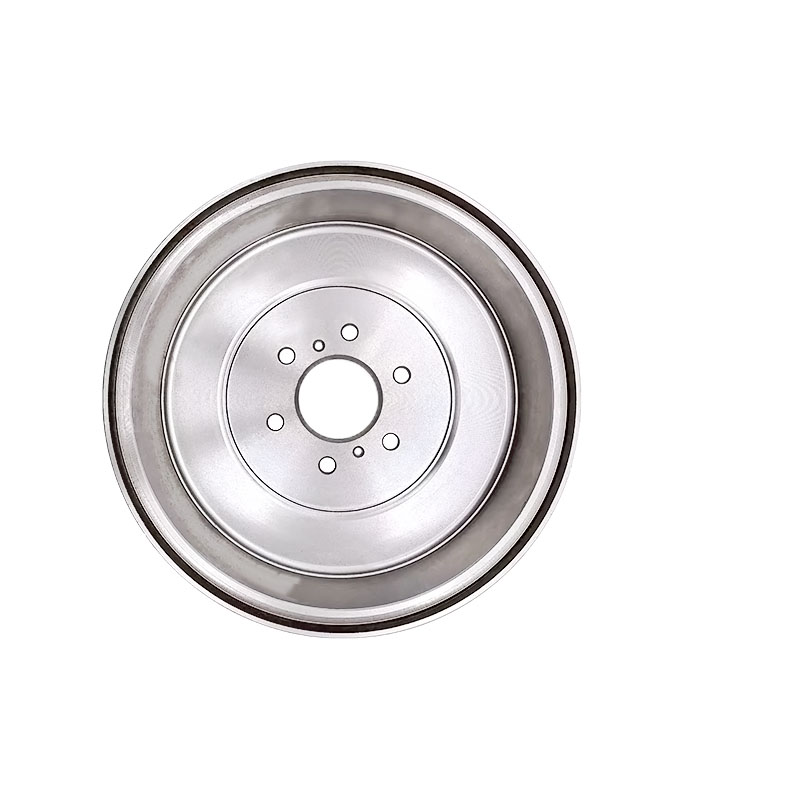
Batch size transforms the per-unit economic model. Understanding how volume affects pricing helps you optimize your purchasing strategy. Fixed costs behave differently across varying production runs.
Every machining job requires upfront preparation. This preparation represents a fixed cost, regardless of whether you order one part or one thousand. Let us walk through a typical setup process to understand where the hours go:
CAM Programming and Simulation: The programmer imports your CAD model, selects the cutting tools, generates the toolpaths, and runs collision simulations.
Workholding Preparation: The operator cleans the machine table, bolts down the vises, trams them perfectly straight with a dial indicator, and cuts custom soft jaws if the part geometry requires it.
Tool Assembly and Measurement: The operator loads the required end mills, drills, and taps into the tool carousel. They use a tool setter to measure the exact length and diameter offsets of each tool.
Machine Calibration: The operator uses a spindle probe to locate the raw stock and establish the X, Y, and Z zero points (the work coordinate system).
First Article Inspection: The operator runs the first part at a reduced rapid speed, keeping one hand on the feed hold button. They pull the finished part, take it to the quality lab, and measure every dimension to verify the setup.
This entire process takes hours. If you order one prototype, that single part absorbs 100% of those engineering and setup hours, making the per-part price artificially high.
When you order oem machining parts in large quantities, the math flips. The setup time remains exactly the same. But now, those hours divide across a thousand parts.
High-volume production unlocks advanced manufacturing techniques. A capable cnc machining manufacturer builds custom tombstone fixtures. Instead of holding one part in a vise, a tombstone holds twenty parts on a horizontal machining center. The machine cuts continuously for hours. Pallet changers allow the operator to load raw material on one pallet while the machine cuts parts on the other. The spindle never stops turning. Bar feeders on CNC lathes push new material into the chuck automatically. This relentless efficiency drives the per-part cost down to a fraction of the prototype price.
You have direct control over your manufacturing costs through smart design. Modifying designs to align with machining realities saves money without compromising part function. Implementing DFM principles is the most effective way to control your budget.
A spinning round end mill cannot cut a perfectly sharp internal corner. If you design a square pocket with sharp corners, the shop has to use a wire EDM machine or a broach to clear those corners. This adds immense cost.
Add radii to all internal vertical edges. Make the radius slightly larger than the standard tool size. If you want the shop to use a 0.500-inch end mill, do not make the corner radius exactly 0.250 inches. The tool will engage 90 degrees of material in the corner, causing chatter and poor surface finish. Make the radius 0.275 inches. This allows the tool to sweep through the corner smoothly using a dynamic milling toolpath.
Hole depth also matters. Standard drills wander if pushed too deep. If you design a hole that is ten times deeper than its diameter, the machinist has to use peck drilling cycles to clear the chips, and they may need specialized parabolic fluted drills. Keep hole depths under four times the diameter whenever possible.
Design your parts for custom cnc machining by keeping all complex features on one side. If you have a block with holes on all six faces, the operator has to manually reposition the part six times. Try to consolidate features. Can a blind hole move to the top face? Can a side slot redesign as a top-down pocket?
Every setup introduces a chance for positional error. Minimizing setups improves overall accuracy. It reduces the time the machine sits idle while the operator turns wrenches. This directly lowers the final cost of your project.
Do not invent custom thread sizes. Stick to standard UNC, UNF, or metric threads. If you specify an M7x0.75 thread, the shop has to special-order that tap. They pass that cost directly to you. Use standard drill sizes to avoid custom reamers.
Eliminate engraved text. Machining a company logo or part number requires a tiny engraving tool. These tools are fragile. The machine runs at very slow feed rates to avoid snapping the tip. A simple engraved logo can add ten minutes to the cycle time. Use laser marking, ink stamping, or silkscreening instead.
Surface finish callouts drive up cycle times. A standard machined finish usually hovers around Ra 125. If you specify an Ra 32 finish on a large flat surface, the machinist uses a face mill with a very fine step-over, or they slow the feed rate down significantly. Evaluate where you actually need smooth surfaces.
| Surface Finish Callout | Typical Application | Machining Requirement | Cost Impact |
|---|---|---|---|
| Ra 125 (Standard) | Non-mating surfaces, brackets | Standard roughing and finishing passes | Baseline |
| Ra 63 | General mating surfaces | Slower feed rates, sharp tooling | Low Increase |
| Ra 32 | O-ring grooves, static seals | Fine step-overs, potential secondary operations | Moderate Increase |
| Ra 16 or better | Dynamic seals, bearing journals | Grinding, honing, or polishing required | High Increase |
Do not just look at the bottom line. You have to evaluate the entire package. The cheapest quote often ends up being the most expensive mistake if you do not vet the vendor properly.
A quote that comes in 50% lower than the rest is a massive red flag. Look closely at the line items. Did they include the cost of the material test reports (MTRs)? Did they include the anodizing, or did they quote it as "as-machined"? Did they include the Non-Recurring Engineering (NRE) setup fees, or are those hidden in the fine print?
Low-ball quotes carry the risk of inferior material substitution. A dishonest shop might use a cheaper, uncertified extrusion instead of the specified aerospace-grade billet. Lack of material traceability and poor quality control lead to premature part failure. Always demand full transparency in the quoting process.
Vendor reliability matters more than initial savings. Look for a partner that communicates effectively. When you submit a model, do they just spit back a price, or do they offer feedback? A good machinist tells you when opening up a tolerance by two thousandths allows them to skip a grinding operation and save you money.
Evaluate their historical on-time delivery rates. The financial cost of delayed product launches is severe. Halting an assembly line due to rejected, out-of-spec parts destroys your profit margins. You pay your assembly technicians to stand around doing nothing. A slightly higher upfront part cost is worth the guarantee of reliable, high-quality delivery.
Take these immediate steps to optimize your next manufacturing run:
Audit your current CAD files to ensure all internal vertical edges have radii at least 10% larger than standard end mill dimensions.
Separate critical mating tolerances from non-critical dimensions on your 2D drawings to prevent over-machining.
Remove all engraved text, logos, and cosmetic surface finish callouts from internal or hidden components.
Submit a comprehensive RFQ package containing native 3D models, detailed 2D drawings, and specific batch size expectations.
A: Hourly rates vary widely based on location and machine type. Offshore 3-axis mills sit at the lower end of the spectrum, offering baseline rates. Domestic 5-axis machines operated by highly skilled machinists command premium rates. Facility overhead, certifications, and local labor markets heavily influence these hourly figures.
A: Machining time and human labor represent the primary cost drivers. The time a machine spends cutting material, combined with the engineering hours required for CAM programming and setup, usually far exceeds the raw material costs.
A: Apply Design for Manufacturability (DFM) principles. Increase batch sizes to amortize fixed setup fees across more units. Relax non-critical tolerances, design parts to be machined in a single setup, and ensure all internal vertical edges have standard radii.
A: Yes. Material choice impacts cost in two ways. First is the raw cost per pound of the material itself. Second is the material's machinability index, which dictates how fast the machine can cut without breaking tools or causing excessive wear.
A: Five-axis machines require a significantly higher capital investment. They also demand advanced CAM programming software and specialized operator expertise to run safely. However, they can lower total costs for complex parts by reducing the number of manual setups required.
A: Yes, setup fees are standard. They cover the engineering time for CAM programming, machine calibration, tool loading, and custom fixturing. These fixed costs make prototypes expensive but are easily absorbed over larger production runs.
A: Secondary operations like anodizing, heat treating, or tight surface roughness callouts require additional machine time and manual handling. They often involve outsourcing to specialized finishing shops, which adds logistical delays and markup to the final part cost.


