Shenzhen Wandanan Precision Technology Co., Ltd Info@szwandaancnc.com


Views: 0 Author: Site Editor Publish Time: 2026-06-02 Origin: Site


Engineers constantly face a universal challenge in thermal and environmental management. You must protect sensitive components from abrasive particulates. However, doing so often causes severe airflow restriction. This restriction leads directly to dangerous thermal throttling. Modern electronics pack immense processing power into extremely tight spaces. They generate massive heat loads continuously. They demand unobstructed cooling air. Blocking this critical airflow causes rapid system instability.
To solve this, many industries turn to the cotton layer air dust filter. This highly debated yet widely adopted solution protects high-value machinery. We see them functioning flawlessly in automotive intakes. They protect custom high-end PC chassis. They shield heavy industrial equipment from ambient debris.
This article provides an objective, engineering-focused evaluation of cotton media advantages. We will explore realistic maintenance requirements thoroughly. You will also learn the exact criteria needed to specify a Custom Air Dust Filter for your unique manufacturing applications.
Optimal Airflow-to-Filtration Ratio: Layered cotton provides depth filtration, capturing particulates within the media matrix rather than just on the surface, which preserves airflow longer than standard paper filters.
Long-Term ROI via Reusability: When properly maintained and washed, cotton filters offer a lower Total Cost of Ownership (TCO) compared to disposable alternatives.
Design Flexibility: Cotton media is highly adaptable, making it an ideal custom hardware part for non-standard enclosures and specialized equipment.
Maintenance Dependency: Performance is directly tied to strict maintenance schedules; neglect or improper washing/oiling degrades efficiency rapidly.
Let us explore how woven fibers perform physically under aerodynamic load. Layered cotton creates a highly tortuous path for incoming particulates. Standard flat paper blocks particles right at the surface layer. This surface blocking causes rapid pressure drops inside enclosures. Layered cotton acts entirely differently. It traps dirt deep throughout its internal matrix. We call this mechanism depth filtration. Particles enter the first fabric layer. They navigate a microscopic maze of interwoven strands. They eventually snag on deeper internal fibers.
Cotton layers feature a remarkable natural porosity. They allow sustained volumetric airflow continuously. Even as dust loads increase, air easily passes through the overlapping fibers. You do not lose immediate cooling performance. The filter maintains safe operating temperatures for sensitive electronics. Standard materials blind over quickly. Cotton utilizes its entire volume to store incoming debris safely.
Many high-performance filters use a specialized suspension fluid. Manufacturers apply a precise micro-coating of oil. This oil creates a tacky surface across the individual fibers. The fluid acts like a microscopic magnet. The oil enhances the capture rate dramatically. It targets ultra-fine sub-micron particles effectively. Crucially, it does this without clogging the microscopic fiber gaps. You get superior absolute filtration while keeping volumetric airflow exceptionally high.
Cotton mesh provides incredible structural integrity. The woven fibers withstand significant continuous air pressure. You can wash and reuse them for many years. Standardized washing protocols extend their operational lifespan drastically. Compare this resilience to the single-use lifecycle of paper. Paper tears easily under high ambient moisture. Basic synthetic mesh breaks down under vibrational stress. Cotton survives harsh industrial conditions repeatedly.
Let us analyze long-term financial efficiency at scale. You pay a slightly higher initial procurement cost. Buying a custom cotton unit requires upfront capital. However, you completely eliminate frequent replacement cycles. Buying disposable filters repeatedly drains operational budgets. Cotton removes this recurring consumable expense. You achieve significant cost savings across large facilities. Your maintenance budgets remain lean and predictable over a decade.
Cotton also resists severe environmental hazards naturally. It easily handles exposure to mild industrial chemicals and ambient shop oils. The fibers endure extreme temperature fluctuations without melting. Untreated paper dissolves rapidly when wet. Basic plastics warp under high heat conditions near engines. Cotton holds its exact physical shape. As long as you design an appropriate metal or plastic housing, the media performs reliably.
Engineers need a strict comparative breakdown. You must evaluate decision-stage metrics clearly. Choosing the wrong material causes cascading system failures.
Paper offers excellent initial absolute filtration. However, it suffers from rapid airflow restriction almost immediately. You cannot wash or reuse paper elements. Cotton trades a tiny bit of initial micron capture efficiency. In return, you gain superior airflow and complete reusability. Paper works well for basic, low-flow tasks. Cotton dominates high-performance cooling applications.
Synthetic nylon meshes are highly durable. Unfortunately, they act like simple physical sieves. They only offer surface filtration. Dust builds up quickly on the outer screen. Cotton provides superior depth filtration instead. It holds significantly more dust before restricting airflow. Synthetic mesh works best as a coarse pre-filter. Cotton works best as the primary defensive barrier.
Here is a verdict matrix to guide your choice:
| Material Type | Filtration Mechanism | Airflow Retention | Reusability Factor | Best Application Scenario |
|---|---|---|---|---|
| Paper Media | Surface Only | Very Low | None (Disposable) | Standard low-flow replacements |
| Synthetic Mesh | Surface Only | Medium | High (Washable) | Pre-filtering large debris |
| Layered Cotton | Deep Matrix | Very High | High (Washable) | Custom enclosures requiring airflow |
We recommend shortlisting cotton immediately. Do this when sustained airflow and component reusability are non-negotiable success criteria for your project.
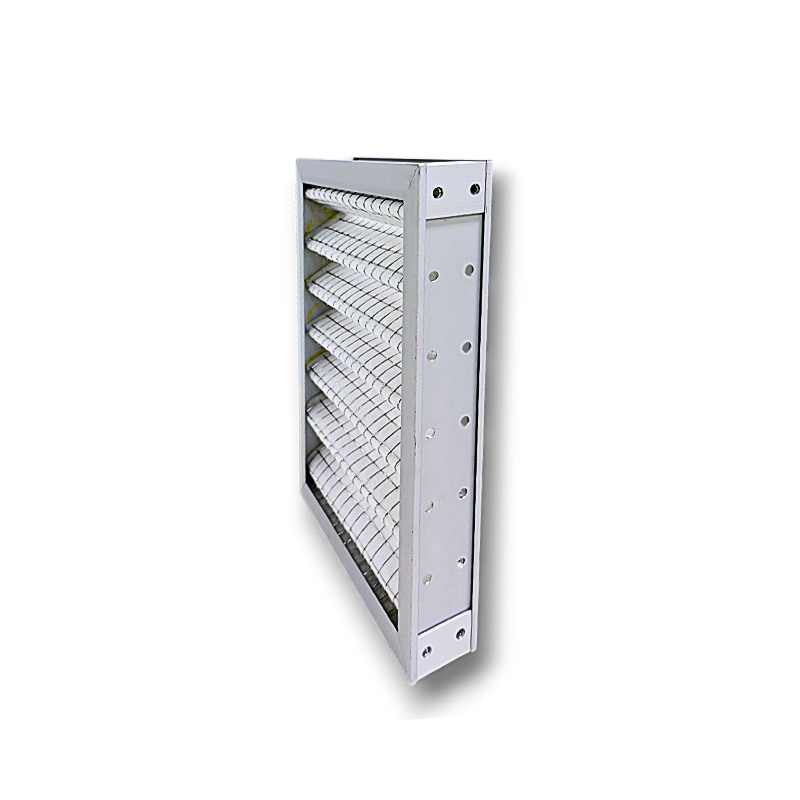
Integrating custom filtration into OEM equipment presents unique realities. You must fit the media into bespoke chassis designs. You cannot rely on off-the-shelf sizing for custom robotics or specialized machinery.
Cotton media offers excellent form factor adaptability. Manufacturers can pleat the fabric deeply. They can layer it precisely to your specifications. They easily bond the layers to rigid aluminum frames. They also use flexible polyurethane frames. This turns the raw media into a precision custom hardware part.
When ordering, you must define strict specification criteria. Engineers should specify these core parameters:
Pleat Depth Dimension: Deeper pleats dramatically increase total surface area. More surface area means lower air velocity through the media.
Optimal Layer Count: Most custom units require 2 to 6 layers. More layers increase filtration efficiency but add slight airflow resistance.
Frame Rigidity Needs: Ensure the chosen frame withstands operational vibration. Industrial machinery shakes violently. The filter must not rattle loose.
Mounting Mechanisms: Choose magnetic strips, threaded screw-mounts, or friction fit options. Magnetic mounts allow the fastest swap times during maintenance.
Defining these parameters guarantees a perfect physical fit. It ensures the filter seals perfectly against the enclosure. Air will always seek the path of least resistance. A poor seal allows dirty air to bypass the filter entirely.
You must acknowledge the operational risks openly. Oiled cotton variants pose a specific danger to electronics. Oil can migrate to sensitive downstream sensors. Automotive mass airflow (MAF) sensors are highly vulnerable to oil filming. Sensitive PCB components can short out under heavy contamination. This failure usually happens if maintenance staff over-apply oil. You must train maintenance teams on precise oiling techniques.
Maintenance creates inevitable operational downtime. Washing a cotton filter is never instant. The fabric must dry completely before reinstallation. You cannot rush this drying step. A wet filter restricts airflow entirely. To achieve a zero-downtime environment, you need a strict logistics strategy. You must maintain rotating spares. Swap a clean unit in while the dirty one washes and dries.
Improper washing degrades performance instantly. Never use high-pressure compressed air. It tears the delicate micro-fibers apart. Never use harsh industrial solvents or heavy degreasers. They break down the underlying structural matrix. Damaging the fibers ruins the filter’s authoritative E-E-A-T rating for particulate control. You lose critical filtration efficiency forever. Follow gentle, manufacturer-approved washing protocols only.
Here is a quick reference chart outlining common maintenance mistakes:
| Maintenance Action | Physical Consequence | Correct Recommendation |
|---|---|---|
| Using standard dish soap | Strips beneficial natural oils | Use proprietary mild cleaners |
| High-pressure air blasting | Blows microscopic holes in mesh | Rinse gently with low-pressure water |
| Oven drying or heat guns | Shrinks and warps cotton layers | Air dry at standard room temperature |
| Soaking in harsh bleach | Destroys fiber tensile strength | Avoid all harsh chemical soaks completely |
Selecting a cotton layer air dust filter follows clear shortlisting logic. It remains the optimal choice for highly specific engineering projects. You should choose it when demanding extremely high volumetric airflow. It excels when you require exact custom sizing. It provides unmatched long-term reusability compared to disposable synthetics.
Decision-makers should take action immediately. First, audit your current airflow restriction data logs. Second, calculate the annual procurement cost of your disposable paper filters. Third, request a prototype custom filter from a specialized manufacturing partner. Run real-world pressure-drop tests directly in your facility. You will see the thermal performance benefits firsthand.
A: Efficiency varies heavily based on layer count and oiling techniques. Multi-layer cotton effectively captures mid-to-large particulates above 5 microns. When you use oiled variants, the tacky surface captures significantly smaller, sub-micron particles. The oil traps fine dust successfully without blocking the primary airpath.
A: No, not initially. Cotton utilizes deep matrix filtration. It allows more sustained airflow over time. Fine synthetic mesh only uses surface filtration. It clogs quickly at the surface layer. This rapid clogging causes severe pressure drops that cotton typically avoids entirely.
A: Maintenance intervals depend entirely on the environmental particulate load. A sterile cleanroom differs vastly from a dirty industrial shop floor. You should base washing schedules on monitored pressure drop metrics. Never rely on arbitrary timelines. Swap the filter when airflow drops below your required operational threshold.


