Shenzhen Wandanan Precision Technology Co., Ltd Info@szwandaancnc.com


Views: 0 Author: Site Editor Publish Time: 2026-08-26 Origin: Site


Poorly specified enclosures cause compounding problems across a product's lifecycle. Failed compliance certifications delay launches. Environmental ingress leads to catastrophic field failures on the job site. Moving a product from prototype to production requires balancing rigid environmental protections with component accessibility. You need scalable manufacturing methods without over-engineering the box. A successful procurement strategy relies on evaluating design requirements, material trade-offs, and supplier capabilities before finalizing CAD files or issuing a purchase order. Designing a custom sheet metal enclosure demands a clear understanding of how fabrication limits intersect with operational reality. Address manufacturability early. This eliminates friction during production, reduces scrap rates on the shop floor, and ensures the final unit survives its intended environment. Stop guessing on tolerances and start designing for the machines that will actually cut and bend your parts.
Material Selection Drives Cost and Resilience: The choice between aluminum, cold-rolled steel, and stainless steel dictates up to 80% of the enclosure's environmental durability and raw material cost.
DFM is Non-Negotiable: Applying Design for Manufacturability (DFM) principles—like standardizing bend radii, utilizing stocked materials, and choosing standard enclosure shapes—drastically reduces tooling fees and lead times.
Compliance Must Lead Design: NEMA and IP ratings for electrical components must be defined prior to the CAD phase to ensure proper gasketing, welding, and sealing techniques are integrated.
Supplier Capabilities Dictate Scalability: Partnering with a metal enclosure supplier that handles finishing and secondary operations in-house mitigates quality control risks and supply chain bottlenecks.
Standard boxes fail when you push hardware architectures to the limit. You need a custom approach when deploying highly specific I/O configurations that do not match standard knockouts. Proprietary PCB mounting demands exact standoff placements to prevent board flex and ensure secure connections under vibration. Spatially constrained deployments, such as integrating hardware into existing machinery or tight architectural spaces, require unique form factors that off-the-shelf units cannot accommodate. Custom designs become mandatory when you need specialized thermal management. Integrating custom venting patterns, targeted fan placements, or built-in heat sinks ensures high-power components operate within safe temperature ranges.
To determine if a custom build is required, evaluate your project against these operational parameters:
Map out all proprietary PCB mounting points and required standoff heights.
Calculate internal heat loads to determine active or passive venting needs.
Measure the physical constraints and mounting requirements of the installation site.
Identify specific I/O connector cutouts that deviate from standard factory knockouts.
Assess the need for specialized EMI/RFI shielding or internal compartmentalization.
Modifying commercial off-the-shelf units carries hidden penalties that quickly erode initial savings. Secondary machining is highly labor-intensive. Manually milling, drilling, or punching holes into pre-fabricated boxes requires precise fixturing and setup time for each individual unit. Altering a finished product compromises its structural integrity. Drilling into a sealed box introduces potential ingress points, immediately voiding existing IP or NEMA certifications. Factory-applied coatings chip or flake during secondary machining. This leaves raw metal exposed to rapid oxidation and rust, leading to premature field failure.
You do not always have to reinvent the wheel when designing a custom unit. Referencing standard enclosure shapes serves as a highly efficient baseline for your custom CAD models. Utilizing a standard U-shape chassis, an L-shape bracket design, or extruded side profiles saves significant engineering time. These familiar geometries reduce complex bending requirements on the press brake. They allow operators to use standard tooling setups, accelerating production. Starting with a proven geometric foundation maintains custom functionality while keeping fabrication straightforward and predictable.
Evaluate operational hazards long before selecting materials. Indoor deployments differ vastly from outdoor setups. For outdoor applications, you must account for prolonged UV exposure, which degrades standard paints and plastics over time. Precipitation, humidity, and extreme temperature fluctuations dictate the need for robust sealing and condensation management. Corrosive environments, such as marine deployments or chemical processing facilities, demand highly resistant alloys like 316L stainless steel. Mobile or heavy-machinery applications introduce severe vibration and shock requirements. Enclosures in these settings require reinforced mounting points, thicker gauges, and vibration-resistant fasteners to prevent structural fatigue.
Navigating compliance dictates the entire mechanical design of an electrical box enclosure. Map the required rating directly to operational reality. An IP67 rating ensures protection against temporary submersion. A NEMA 4X rating guarantees protection against washdown environments and corrosive agents. Specific fabrication techniques heavily impact certification success. Achieving high IP ratings requires continuous seam welding rather than standard spot welding. Continuous welds eliminate micro-gaps where water penetrates. Specialized poured-in-place polyurethane or die-cut neoprene gasketing must be engineered into the door channels to maintain a watertight seal under compression.
| IP / NEMA Rating | Environmental Threat | Required Fabrication Technique | Gasketing Standard |
|---|---|---|---|
| IP54 / NEMA 12 | Dust and splashing water | Spot welding with sealed seams | Standard strip gasketing |
| IP65 / NEMA 4 | Low-pressure water jets | Continuous seam welding | Die-cut or poured-in-place |
| IP67 / NEMA 6 | Temporary submersion | Full penetration welding, leak tested | High-compression molded silicone |
| NEMA 4X | Corrosive washdown | 304/316 Stainless or Aluminum only | Chemical-resistant EPDM |
Plan functional internal requirements early in the flat pattern stage. Integrate cable management tie-offs, DIN rail mounting brackets, and PCB standoffs into the initial laser cut file. Punching or pressing these features before the metal is bent avoids impossible post-production drilling inside a formed box. Calculate the heat load of your internal components to dictate thermal management. Decide between CNC-punched louvers for passive cooling or specific fan cutouts for active airflow. In high-heat applications, utilize the enclosure body itself as a heat sink, drawing thermal energy away from critical components and dissipating it into the surrounding environment.
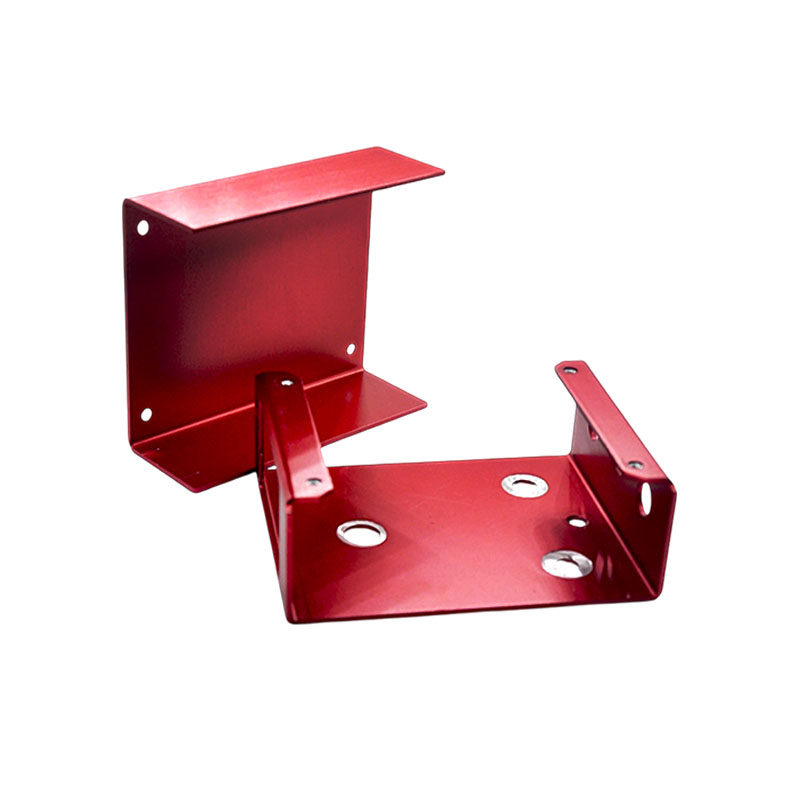
Material selection dictates both the physical durability and the fundamental manufacturing approach. Successful sheet metal fabrication relies heavily on matching the right alloy to the environmental demands and the shop's machining capabilities.
Cold Rolled Steel offers excellent structural rigidity and impact resistance. It is highly cost-effective, making it the dominant choice for indoor applications like server racks, industrial control panels, and junction boxes. CRS forms predictably on the press brake and welds easily using standard MIG or TIG processes. However, CRS is highly susceptible to rust and oxidation. It requires mandatory secondary finishing, such as powder coating or zinc plating, to survive even mild ambient humidity. Any scratch through the coating will rapidly develop surface rust.
Stainless steel provides inherent corrosion resistance without the need for additional coatings. It is non-reactive and easily sanitized. This makes it the standard for medical devices, food-grade processing equipment, and marine environments. Grade 304 handles general washdown environments and mild chemicals. Grade 316 contains molybdenum, providing superior resistance to chlorides, salt spray, and harsh industrial chemicals. The primary drawbacks are higher raw material costs and increased material hardness. Stainless steel requires more press brake tonnage to bend and accelerates tool wear during punching and machining.
Aluminum delivers an exceptional strength-to-weight ratio. It offers excellent thermal conductivity, making it ideal for enclosures that must dissipate internal heat from power supplies or processors. Aluminum naturally forms a protective oxide layer, rendering it highly corrosion-resistant even when left bare. Grade 5052 is the industry standard for sheet metal because it bends easily without cracking along the bend line. Grade 6061 is stronger but more brittle, requiring much larger bend radii to prevent fracturing. Aluminum has lower tensile strength compared to steel and requires specific AC TIG welding expertise to prevent warping and burn-through.
Galvanized and galvanneal steels offer pre-coated efficiency. They feature a zinc coating applied at the mill, providing immediate rust protection. These materials work well in concealed architectural spaces, HVAC ducting, or industrial applications where aesthetics are secondary. Galvanneal is specifically processed to accept paint readily without extensive priming. Welding these coated steels requires strict safety protocols. The intense heat burns off the zinc layer, releasing toxic zinc oxide fumes that demand heavy ventilation and fume extraction systems during fabrication.
| Material | Best Application | Key Advantages | Primary Drawbacks |
|---|---|---|---|
| Cold Rolled Steel (CRS) | Indoor control panels, IT racks | High rigidity, cost-effective, easy to weld | Requires mandatory finishing, rusts easily |
| Stainless Steel (304/316) | Medical, food-grade, marine | Inherent corrosion resistance, sanitary | High material cost, requires high tonnage to bend |
| Aluminum (5052) | Aerospace, heat-dissipating units | Lightweight, thermally conductive | Requires specialized welding, lower tensile strength |
| Galvanneal Steel | Industrial, concealed utility boxes | Pre-coated rust protection, paint-ready | Toxic fumes during welding, rougher finish |
Design for Manufacturability minimizes production friction and eliminates unnecessary expenses. Align your design with the actual fabrication process. Understand the sequence of operations: flat patterns are cut via laser or CNC punch, formed on a press brake, and then welded and finished. Designing parts that flow smoothly through these sequential steps avoids costly secondary machining. Placing a hole too close to a bend line causes the hole to distort and stretch during forming. Understanding the machine's limitations allows you to adjust hole placements in CAD, ensuring a perfect punch every time.
Follow these strict DFM rules to keep fabrication costs under control:
Keep hole diameters equal to or greater than the material thickness to prevent punch tool breakage.
Place holes and cutouts at least 1.5 times the material thickness away from any bend line.
Design with a single, uniform inside bend radius across the entire part to eliminate press brake setup changes.
Use standard sheet metal tolerances (+/- 0.010" to 0.015") unless a tighter tolerance is absolutely required for a mating surface.
Specify standard hardware sizes to utilize automated hardware insertion machines.
Standardize bend radii across a single part. Using uniform bend radii reduces machine setup time significantly. The press brake operator forms the entire part without stopping to change out heavy punch and die tooling. Ideally, the inside bend radius should equal the material thickness. Specifying multiple different radii on a single enclosure forces the manufacturer to use custom press brake tooling or perform multiple setups. Every setup change adds direct labor time, which inflates your per-unit cost.
Evaluate hardware and fastener integration carefully. Self-clinching fasteners, such as PEM nuts, flush-head studs, and blind standoffs, are pressed into pre-punched holes using a pneumatic press. They offer fast assembly and clean aesthetics without the heat distortion associated with welding. Compare these against welded standoffs. Welded hardware provides superior pull-out strength for heavy internal components but requires more labor, fixturing, and post-weld cleanup. Choose the fastening method that matches your load requirements and assembly speed goals.
Over-specifying tolerances severely impacts financial viability. Tight tolerances increase scrap rates, demand specialized tooling, and require extensive inspection times. Apply tight tolerances only to critical mating surfaces or PCB mounting points. Leave general dimensions with standard sheet metal tolerances. Select the appropriate gauge to maintain structural integrity without unnecessary weight. Over-engineering a small indoor junction box with 11-gauge steel adds useless weight and material cost. Match the gauge to the structural load and environmental threat.
Design around stocked materials whenever possible. Utilizing a manufacturer's standard, in-stock sheet thicknesses and grades drastically reduces lead times. It helps you avoid high Minimum Order Quantities (MOQs) associated with ordering custom mill runs. If your design requires 14-gauge 5052 aluminum, check if your fabrication partner regularly stocks it. Aligning your bill of materials with their inventory ensures your project moves straight to the laser cutter without waiting weeks for raw material delivery.
Finishes provide essential environmental protection and define the product's final aesthetic. Powder coating involves applying a dry, electrostatically charged powder that is baked into a durable, hard finish. It offers superior durability, chip resistance, and scratch protection compared to wet paint. Powder coating scales exceptionally well for production runs and complies easily with environmental regulations because it emits virtually zero Volatile Organic Compounds (VOCs). Wet paint is generally reserved for parts that cannot withstand the high baking temperatures of powder coating or require highly specific custom color matching.
Evaluate plating and anodizing options for specific functional requirements. Chromate conversion (often referred to as Chem Film) and zinc plating enhance corrosion resistance on steel and aluminum parts while maintaining a very thin profile. Anodizing is specific to aluminum. It thickens the natural oxide layer, creating an extremely hard, corrosion-resistant surface that can be dyed various colors. Certain clear chromate conversions maintain electrical conductivity. If your enclosure requires EMI shielding or grounding, you must specify masking areas during the finishing process to ensure bare metal contact points remain exposed.
Integrate labeling directly into the manufacturing run. Silkscreening applies epoxy-based ink directly to the finished enclosure, providing crisp, multi-color logos and text. Laser engraving physically removes the top layer of the finish to expose the bare metal underneath, creating a permanent, high-contrast mark that cannot wear off. Permanent labeling ensures regulatory compliance by displaying required NEMA ratings, UL listings, or CE marks. It provides clear safety warnings for operators and reinforces corporate branding on the final deployed product.
Vetting your manufacturing partner is as critical as perfecting your CAD files. Partner with a reliable metal enclosure supplier that controls the entire process. A sheet metal manufacturer with in-house cutting, bending, welding, and finishing reduces lead times dramatically. When a single facility handles the entire build, you eliminate multi-vendor finger-pointing. If a welded seam fails inspection before powder coating, an in-house team corrects it immediately. Relying on a shop that outsources finishing introduces shipping delays and quality control blind spots.
Assess the supplier's ability to scale alongside your product demand. A strong partner transitions smoothly from low-volume prototyping to high-volume production. During prototyping, they utilize flexible job shop processes like laser cutting and CNC press brakes to avoid tooling costs. As your volume increases to thousands of units, they must have the capability to transition your design to hard tooling or stamping processes. This scalability ensures your unit costs decrease as your order volumes grow, without needing to find and vet a new supplier mid-lifecycle.
Verify their Quality Assurance protocols and material traceability. Look for strict ISO 9001 compliance, which guarantees standardized manufacturing and inspection procedures across the shop floor. Request First Article Inspection (FAI) reporting capabilities to ensure the first unit off the line matches your exact dimensional requirements before the full run begins. For regulated industries like medical devices or aerospace, ensure the supplier provides complete raw material traceability, including mill certs, to prove the exact grade and origin of the alloys used in your enclosures.
Finalize 3D CAD models and 2D drawings with defined tolerances and specific, uniform bend radii.
Document required NEMA/IP ratings and specify masking points for electrical grounding directly on the print.
Request a detailed quote that clearly separates Non-Recurring Engineering (NRE) costs, tooling fees, and per-unit pricing.
Verify your chosen alloys align with the supplier's standard stocked inventory to shorten lead times.
A: Standard lead times range from 2 to 6 weeks for prototypes and initial production runs. This timeline depends on material availability, bend complexity, and required secondary finishes. Utilizing in-stock materials and standard tooling accelerates delivery, while custom extrusions or specialized plating extends the schedule.
A: Choose the gauge based on structural load, internal component weight, and environmental hazards. For standard indoor electronics, 16-gauge or 14-gauge steel is typical. Heavy industrial or outdoor applications require 12-gauge or thicker. Balance the need for rigidity against increased weight and material cost.
A: Yes. Aluminum naturally resists corrosion, fulfilling a key requirement for NEMA 4X. To achieve the full rating, the enclosure must feature continuous seam welding, watertight poured-in-place or die-cut gasketing, and sealed hardware to prevent water or dust ingress during washdown procedures.
A: Powder coating is the most cost-effective and durable finish for indoor steel enclosures. It provides a hard, scratch-resistant surface, covers minor surface imperfections from fabrication, and scales economically for medium to high-volume production runs without emitting harmful VOCs.
A: Setup fees and Non-Recurring Engineering (NRE) costs cover the manual labor required to program CNC machines, configure press brake tooling, and create custom welding fixtures. In low-volume runs, these fixed labor costs are distributed across fewer units, making the initial per-unit price higher.
A: Specifying multiple different bend radii on a single part forces the operator to change press brake tooling multiple times, increasing labor costs and setup time. Standardizing a single inside bend radius allows the part to be formed in one continuous sequence.


