Shenzhen Wandaan Precision Technology Co., Ltd Info@szwandaancnc.com

- All
- Product Name
- Product Keyword
- Product Model
- Product Summary
- Product Description
- Multi Field Search
Please Choose Your Language


Views: 0 Author: Site Editor Publish Time: 2026-05-20 Origin: Site


Capturing particulate matter effectively without choking system airflow remains a fundamental engineering challenge. Modern systems demand a delicate balance between air purity and aerodynamic efficiency. If you install dense media, it often restricts airflow and creates severe pressure drop penalties. This guide evaluates physical particulate barriers rather than chemical mitigators or biological inactivators. We focus exclusively on standard and specialized components like a high-quality air dust filter.
You must establish a realistic baseline expectation. There is no universal "best" filter for every environment. Selection depends entirely on balancing Minimum Efficiency Reporting Value (MERV) targets, Dust-Holding Capacity (DHC), and system static pressure limits. By reading this guide, you will understand the complex physics behind particulate capture. You will explore five primary filter categories and learn how to evaluate international filtration metrics. Ultimately, you will gain the knowledge necessary to specify the exact filtration media your specific equipment requires.
Trade-offs dictate selection: Higher filtration efficiency naturally increases airflow resistance; indiscriminately upgrading to HEPA or MERV 13+ can paralyze standard HVAC motors.
Media matters: Pleated designs exponentially increase surface area compared to flat fiberglass, allowing for higher dust capture without immediate pressure penalties.
Standard vs. Custom: While standard residential and commercial systems rely on nominal sizes, specialized industrial machinery often requires a Custom Air Dust Filter engineered as a specific custom hardware part.
Metrics beyond MERV: True evaluation requires analyzing Arrestance (for large particles), Most Penetrating Particle Size (MPPS), and Dust-Holding Capacity (DHC).
Many people mistakenly assume modern air filters act like simple sieves. They imagine a screen where particles simply fail to fit through the holes. However, physical particulate capture relies on complex aerodynamic principles. Fluid dynamics and particle momentum dictate how a filter traps contaminants. Understanding these mechanisms helps you choose the correct media density for your facility.
Large particles rely on a mechanism called impaction. Contaminants like coarse dust, human hair, and heavy pollen possess high inertia. As the air stream curves around the filter fibers, these heavy particles cannot change direction quickly enough. They physically collide directly into the front of the filter fibers and remain trapped.
Medium-sized particles follow the airflow more closely. They possess less inertia and navigate the primary curves of the air stream. However, they brush against the sides of the filter fibers as they pass. The physical contact causes them to stick to the media. We call this process interception.
The smallest micro-particles behave entirely differently. Particles below 0.3 microns vibrate erratically as they travel. We refer to this random zigzag movement as Brownian motion. Because they bounce around so violently, they eventually collide with the filter fibers. This diffusion mechanism explains why HEPA filters capture highly elusive 0.3-micron matter so effectively.
An interesting operational reality occurs as filters age. They actually become slightly more efficient as they accumulate a preliminary layer of dust. We call this the "dust cake." The trapped dust creates an additional, highly porous web. It helps catch even more particles. However, this benefit only lasts up to a critical point. Once the dust cake grows too thick, airflow becomes severely restricted. System strain rapidly increases, demanding immediate replacement.
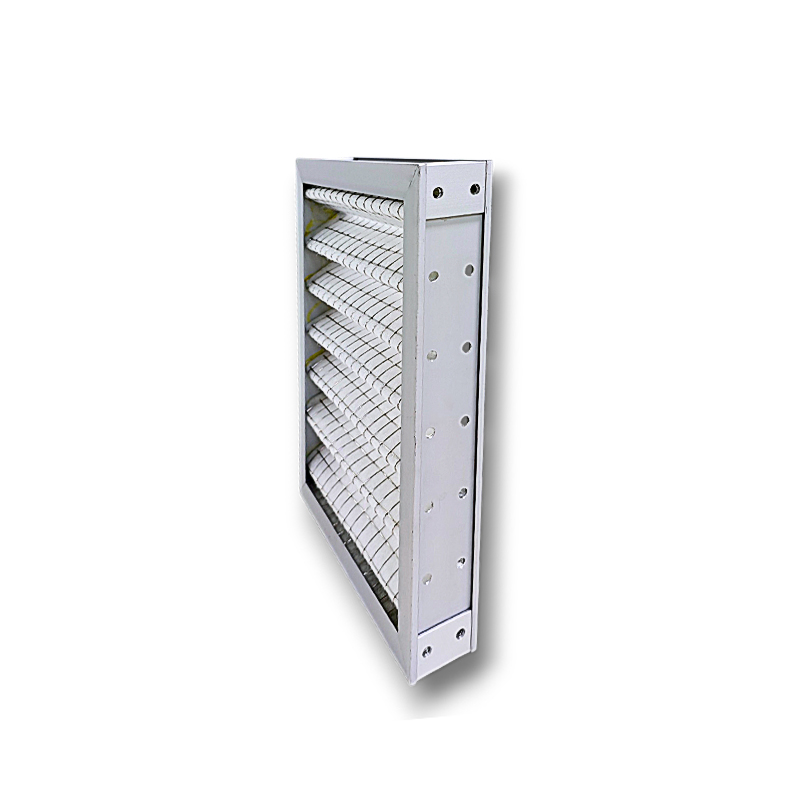
Selecting the proper filtration type requires aligning your specific application needs with the inherent strengths of the media. Let us examine the five main categories used across residential, commercial, and industrial settings.
These filters represent the most basic level of particulate protection. They utilize a flat, non-pleated mesh spun from fiberglass.
Mechanism: They rely on a highly porous flat web. The open structure allows maximum air passage.
Business Value: They offer extremely low cost and minimal airflow restriction. Facility managers often use them as disposable pre-filters.
Limitations: They typically achieve only MERV 1 to 4. They act as a "rock catcher" to protect HVAC fan motors from large debris. They do not improve indoor air quality or capture fine dust.
Pleated filters dominate the modern residential and light commercial markets. They upgrade standard fiberglass technology significantly.
Mechanism: Manufacturers fold synthetic or cotton blends into an accordion shape. This maximizes the physical surface area within a confined frame.
Business Value: They deliver an excellent balance of airflow and capture rate. MERV 8 serves as the standard baseline. MERV 13 represents the "sweet spot" for aggressive dust and allergen control.
Limitations: You must monitor them closely. High-MERV pleated filters clog quickly in heavy-dust environments, such as workshops or homes with multiple pets.
When high air volumes and severe particulate loads meet, standard flat filters fail. Engineers turn to deep media solutions.
Mechanism: These utilize deep, multi-pocket bags or V-bank rigid frames. They contain massive amounts of synthetic or fiberglass media.
Business Value: They provide massive Dust-Holding Capacity (DHC). Facilities install them to handle variable air volumes and high static pressure. You find them commonly in hospitals, airports, and large factories.
Limitations: They require significant physical space. They remain entirely incompatible with standard residential or light-commercial HVAC systems.
Some environments generate massive amounts of coarse dust that would rapidly exhaust disposable media. Electrostatic options provide a reusable alternative.
Mechanism: They use friction from the airflow to generate a static charge. This charge magnetically attracts particles to the metal or plastic mesh.
Business Value: They are washable and reusable. This reduces long-term replacement frequency. They serve well in heavy, coarse dust environments like industrial workshops and commercial kitchens.
Limitations: They require high maintenance. You must dry them thoroughly after washing to prevent mold growth. Their effectiveness drops significantly for microscopic particles.
Cleanrooms and medical facilities demand absolute particulate control. These filters provide the highest standard of physical filtration.
Mechanism: They consist of a dense mat of randomly arranged fiberglass fibers. HEPA captures 99.97% of particles down to 0.3 microns. ULPA captures 99.999% of particles down to 0.12 microns.
Business Value: They are mandatory for surgical suites, semiconductor manufacturing, and hazardous material mitigation.
Limitations: They cause extreme pressure drops. You must install dedicated, high-power blowers. They also require strict pre-filtration networks to prevent rapid clogging.
| Filter Type | Typical MERV Range | Primary Mechanism | Ideal Application | Airflow Restriction |
|---|---|---|---|---|
| Spun Glass / Fiberglass | 1 - 4 | Impaction | Basic equipment protection | Very Low |
| Pleated Media | 5 - 13 | Impaction / Interception | Residential / Light Commercial | Medium |
| Rigid / Bag Filters | 11 - 15 | Interception / High Surface Area | Hospitals / Airports | Medium to High |
| Washable Electrostatic | 4 - 8 | Static Attraction | Industrial Workshops | Low to Medium |
| HEPA / ULPA | 16+ (Equivalent) | Diffusion / Interception | Cleanrooms / Surgical Suites | Extremely High |
Standard HVAC dimensions serve commercial buildings well. However, specialized equipment rarely accommodates off-the-shelf sizes. Engineers face scenarios where standard filters prove entirely inadequate. Applications like internal combustion engines, heavy equipment enclosures, and proprietary electronics cooling demand tailored solutions.
When standard sizes fail, you must engineer a Custom Air Dust Filter. Designing a filter as a specialized custom hardware part involves calculating precise variables. Air always takes the path of least resistance. If a filter does not fit perfectly, air bypasses the media entirely. You must specify exact dimensions down to the millimeter to prevent bypass leaks.
Furthermore, you must select media tailored to the specific environmental contaminant. For instance, high-humidity marine environments degrade standard cardboard and cotton quickly. A custom design might incorporate moisture-resistant synthetic blends. Finally, choosing the right frame material determines structural integrity. Aluminum provides exceptional corrosion resistance for heavy-duty applications. Conversely, heavy-duty moisture-resistant cardboard offers easier disposal for frequent change-outs.
Best Practice: Always test prototype filters in actual operational conditions. Bench testing rarely replicates the exact vibration and airflow turbulence experienced by machinery in the field.
Most North American consumers rely solely on MERV ratings. However, comprehensive evaluation requires a deeper understanding of global standards and performance metrics.
ASHRAE developed the MERV standard to rate filters on a scale from 1 to 16. It measures the filter's ability to capture particles between 0.3 and 10 microns. Note that true HEPA effectively operates above MERV 16. Experts evaluate HEPA media on a completely different testing scale due to its extreme density.
International sourcing relies heavily on the ISO 16890 standard. It recently replaced the older EN 779 framework. Instead of assigning a single score, ISO 16890 categorizes filters by Particulate Matter (PM) sizes. You will see ratings like ePM1, ePM2.5, and ePM10. This system better reflects real-world environmental pollution metrics monitored by global health organizations.
Engineers value DHC just as highly as capture efficiency. Dust-Holding Capacity measures the total weight of dust a filter can retain. It calculates this weight right before the filter reaches its maximum allowable pressure drop. High DHC proves critical for extending maintenance intervals in harsh environments.
We measure airflow restriction via static pressure drop. Initial resistance indicates the pressure drop when the filter is brand new. Final resistance marks the point when the filter is fully loaded with dust. Once a filter hits its final resistance threshold, you must replace it to prevent motor failure.
Deploying the correct filtration system requires a systematic approach. You must map your environmental threats directly to your hardware capabilities.
You cannot specify media without knowing the exact enemy. Analyze the particulate matter in your space.
Coarse dust and hair: Rely on fiberglass or washable electrostatic filters.
Fine household dust and pollen: Choose MERV 8 to 13 pleated media.
Dangerous micro-particulates and pathogens: Demand HEPA or ULPA filtration.
You must consult your equipment specifications before upgrading. Installing a HEPA or MERV 14 filter in a system designed for MERV 4 creates disaster. The dense media starves the blower motor. It will freeze evaporator coils, burn out blower motors, and paradoxically reduce overall air circulation. Always map the filter's initial resistance to the fan's maximum static pressure capability.
Factor in your replacement frequency constraints based on Dust-Holding Capacity. A thin, low-capacity filter might clog within weeks in an industrial setting. This leads to constant downtime and labor disruption. High-capacity bag filters extend the operational window significantly. They allow you to stretch replacement schedules to bi-annual intervals. Always use pressure drop gauges (manometers) to monitor the exact loading point.
Acknowledge the fundamental limits of physical media. Dust filters trap solid particulates. They do absolutely nothing to mitigate odors, Volatile Organic Compounds (VOCs), or active viral threats. If these threats exist, you must pair your particulate media with complementary systems. Use Activated Carbon filters for gas adsorption. Install UV-C lighting systems to handle biological control. Layering technologies provides comprehensive environmental protection.
Successful filtration operates as a strict engineering compromise. You must carefully balance the desire for maximum particle capture against the necessity of maintaining healthy system airflow. Pushing efficiency too high without upgrading fan power ultimately degrades air quality.
We recommend specific pathways for different applications. For standard commercial facility upgrades, transition to deep-pleated MERV 13 media. It captures the vast majority of problematic allergens without stressing standard motors. For specialized manufacturing or proprietary machinery, generic solutions fail. Engage an engineering partner to develop a tailored hardware solution. By aligning media type, structural dimensions, and system pressure limits, you ensure reliable, long-term equipment protection.
A: Dust filters use physical media to trap solid particulates like dust, skin cells, and pollen. Carbon filters use a chemical process called adsorption to trap gases, VOCs, and odors. They serve entirely different purposes and are often layered together for comprehensive air purification.
A: No. While high-MERV filters capture more microscopic dust, they also restrict airflow. If your system lacks the blower power to pull air through the denser media, overall circulation drops. This causes dust to settle on surfaces long before it ever reaches the filter.
A: It depends strictly on your environment's dust load and the filter's Dust-Holding Capacity (DHC). Best practice dictates replacing filters based on pressure drop gauges. Change them when the manometer reaches the filter's maximum final resistance, rather than relying on an arbitrary calendar schedule.


