Shenzhen Wandaan Precision Technology Co., Ltd Info@szwandaancnc.com


Views: 0 Author: Site Editor Publish Time: 2026-01-06 Origin: Site


Are you aware of the crucial role copper busbars play in electrical systems? These conductive strips are essential for efficient power distribution.
In this article, we’ll explore how to calculate the current carrying capacity of copper busbars. You’ll learn about their importance in safety and efficiency across various industries, including automotive and renewable energy.
Current carrying capacity, commonly referred to as ampacity, is a critical factor in electrical engineering. It defines the maximum current a copper busbar can safely carry without overheating. This capacity ensures that electrical systems operate efficiently and safely.
Several factors influence ampacity, including:
● Material Quality: High-purity copper, like that used in SZWANDAAN products, offers superior conductivity.
● Dimensions: The width and thickness of the busbar directly impact its ability to dissipate heat.
● Environmental Conditions: Ambient temperature and installation environment play significant roles in determining ampacity.
Understanding ampacity is essential for several reasons. First, it helps prevent overheating, which can lead to electrical failures. Overheating poses significant risks, including potential fire hazards and equipment damage.
Moreover, compliance with electrical standards is crucial for safety and reliability. Many industries, especially automotive and renewable energy sectors, rely on strict adherence to these standards. SZWANDAAN’s copper busbars meet these requirements, ensuring high performance in various applications.
Factor | Impact on Ampacity |
Material Quality | Higher purity increases conductivity |
Dimensions | Thicker and wider bars can carry more current |
Environmental Conditions | Higher temperatures reduce ampacity |
In summary, the significance of ampacity cannot be overstated. It is vital for ensuring the safety and efficiency of electrical systems. By understanding the factors affecting ampacity, you can make informed decisions when selecting copper busbars for your projects. This ensures optimal performance and compliance with industry standards.
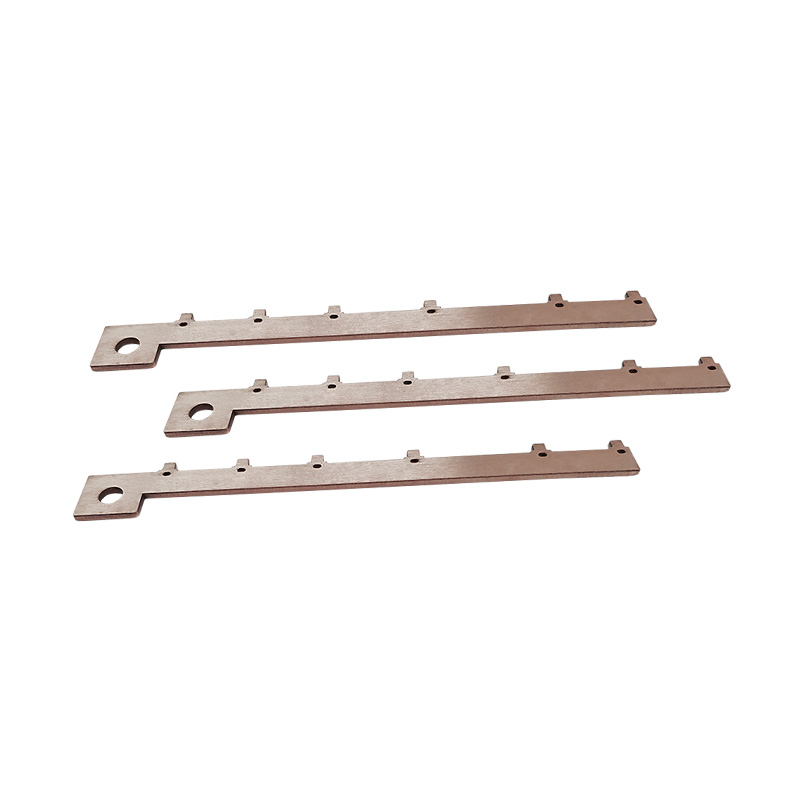
The quality of the material used in copper busbars plays a significant role in determining their ampacity. High-purity copper, specifically with a conductivity rating of 99% or higher, is essential. This level of purity enhances electrical conductivity, making it ideal for efficient power transmission.
When comparing high-purity copper to other conductive materials, the differences become clear. For instance, aluminum has lower conductivity, which means it cannot carry as much current without overheating. This is where SZWANDAAN’s products shine, as they utilize only the best materials to ensure optimal performance.
Material | Conductivity | Ampacity Performance |
High-Purity Copper | 99%+ | Superior |
Aluminum | 61% | Lower |
Copper Alloys | Varies | Moderate |
The dimensions of a copper busbar, particularly its width and thickness, significantly impact its ampacity. A wider and thicker busbar can carry more current without overheating. For example, a busbar that measures 100 mm in width and 10 mm in thickness will have a higher ampacity compared to a narrower or thinner one.
SZWANDAAN offers customization options for their busbars, allowing clients to tailor dimensions based on specific application needs. This flexibility ensures that the busbars can meet varying demands, whether for industrial or renewable energy applications.
Environmental factors also greatly influence the ampacity of copper busbars. Ambient temperature plays a crucial role; as temperatures rise, the capacity to carry current decreases. For instance, if the ambient temperature exceeds 40°C, the ampacity needs to be adjusted accordingly to prevent overheating.
The installation environment affects performance as well. Busbars installed in sealed panels typically have reduced cooling capabilities compared to those in open air. This can result in a 20-30% decrease in ampacity.
The arrangement and installation of copper busbars can further affect their ampacity. Single-layer installations are straightforward and often more efficient in terms of heat dissipation. However, multi-layer installations are sometimes necessary for space constraints.
When using multi-layer busbars, it’s essential to consider heat dissipation. SZWANDAAN designs their products to account for these factors, ensuring that even in multi-layer configurations, the busbars maintain a high level of performance.
Installation Type | Heat Dissipation Efficiency |
Single-Layer | High |
Double-Layer | Moderate |
Multi-Layer | Needs careful design |
By understanding these key factors, you can make informed decisions when selecting copper busbars. This ensures optimal performance and safety in your electrical systems.
When you need a quick way to estimate the current carrying capacity of a copper busbar, the rule of thumb formula is quite handy. The formula is:
$$ I = 1.2 \times \text{Width (mm)} \times \text{Thickness (mm)} $$
This equation provides a straightforward way to calculate the ampacity based on the busbar's dimensions. For example, if you have a busbar that is 50 mm wide and 10 mm thick, the calculation would look like this:
1. Width: 50 mm
2. Thickness: 10 mm
Plugging these numbers into the formula gives:
$$ I = 1.2 \times 50 \times 10 = 600 \text{ A} $$
This means the busbar can safely carry 600 amps under standard conditions, making it a useful starting point for many applications.
For more precise calculations, especially in critical applications, detailed methods should be employed.
A more comprehensive approach involves using the basic formula for thermal equilibrium:
$$ I = J \times A $$
Here, I represents the current, J is the current density (measured in A/mm²), and A is the cross-sectional area of the busbar. This formula allows for a more tailored calculation based on specific parameters.
Understanding Current Density (J): Current density is the amount of current flowing per unit area. Its value can change based on material properties and environmental conditions.
Calculating Cross-Sectional Area (A): The area can be calculated as:
$$ A = \text{Width (mm)} \times \text{Thickness (mm)} $$
As temperatures increase, the ampacity of a copper busbar decreases. To adjust for higher operating temperatures, you can use a temperature correction factor. The adjusted current can be calculated using:
$$ I_{\text{adj}} = I \times \text{Correction Factor} $$
For example, if the correction factor for a particular temperature is 0.85, and your original calculation gives you 600 A, the adjusted capacity would be:
$$ I_{\text{adj}} = 600 \times 0.85 = 510 \text{ A} $$
When dealing with multi-layer busbar installations, calculating ampacity requires additional considerations. For double or triple-layer configurations, the heat dissipation characteristics change.
Calculating Ampacity: The ampacity for multi-layer installations can be determined by considering empirical coefficients that account for the reduced heat dissipation.
For instance, if you have a double-layer busbar, you might apply a coefficient of 0.75 to the ampacity calculated for a single layer.
Layer Configuration | Coefficient |
Single Layer | 1.0 |
Double Layer | 0.75 |
Triple Layer | 0.60 |
Using these coefficients helps ensure that the busbars operate safely, even when stacked or arranged closely together.
By utilizing these methods, you can accurately calculate the current carrying capacity of copper busbars, ensuring optimal performance and safety in your electrical systems.
Let’s start with a straightforward example of calculating the ampacity for a single-layer copper busbar. Suppose we have a busbar that measures 100 mm in width and 10 mm in thickness. We can use the quick estimation formula:
$$ I = 1.2 \times \text{Width (mm)} \times \text{Thickness (mm)} $$
Step-by-Step Calculation:
1. Width: 100 mm
2. Thickness: 10 mm
Now, plug these values into the formula:
$$ I = 1.2 \times 100 \times 10 = 1200 \text{ A} $$
This means our single-layer busbar can carry a maximum of 1200 amps safely under standard conditions.
Next, let’s look at a double-layer busbar installation. Imagine we have two layers of busbars, each measuring 80 mm in width and 10 mm in thickness.
Calculation Steps:
1. Calculate the ampacity for one layer using the same formula:
$$ I = 1.2 \times 80 \times 10 = 960 \text{ A (for one layer)} $$
2. Apply the coefficient for double-layer arrangements. If we use a coefficient of 0.75 for heat dissipation, the total ampacity becomes:
$$ I_{\text{total}} = 960 \times 0.75 = 720 \text{ A} $$
Thus, the double-layer busbar can safely carry 720 amps.
Now, let’s adjust for increased ambient temperature. Suppose our initial calculation gives us 1200 A for a busbar, but the operating temperature is 50°C, which requires a correction factor of 0.85.
Adjustment Calculation:
$$ I_{\text{adj}} = 1200 \times 0.85 = 1020 \text{ A} $$
This means the busbar’s effective ampacity should be adjusted to 1020 amps to ensure safe operation at higher temperatures.
To illustrate a real-world application, consider SZWANDAAN’s Flat Hard Copper Busbar used in an industrial setting. Let’s assume the busbar dimensions are 120 mm in width and 15 mm in thickness.
Calculation for SZWANDAAN’s Busbar:
1. Initial Ampacity Calculation:
$$ I = 1.2 \times 120 \times 15 = 2160 \text{ A} $$
2. Adjustment for Temperature: If the ambient temperature is 45°C, we apply a correction factor of 0.87:
$$ I_{\text{adj}} = 2160 \times 0.87 = 1885.2 \text{ A} $$
This shows that SZWANDAAN's busbar can reliably carry approximately 1885 amps under these conditions, demonstrating its suitability for demanding industrial applications.
Example | Width (mm) | Thickness (mm) | Calculated Ampacity (A) |
Single-Layer | 100 | 10 | 1200 |
Double-Layer | 80 | 10 | 720 |
SZWANDAAN’s Busbar | 120 | 15 | 1885.2 |
These practical examples illustrate how to calculate the ampacity of copper busbars in different scenarios. By understanding these calculations, you can ensure safe and efficient use of electrical systems.
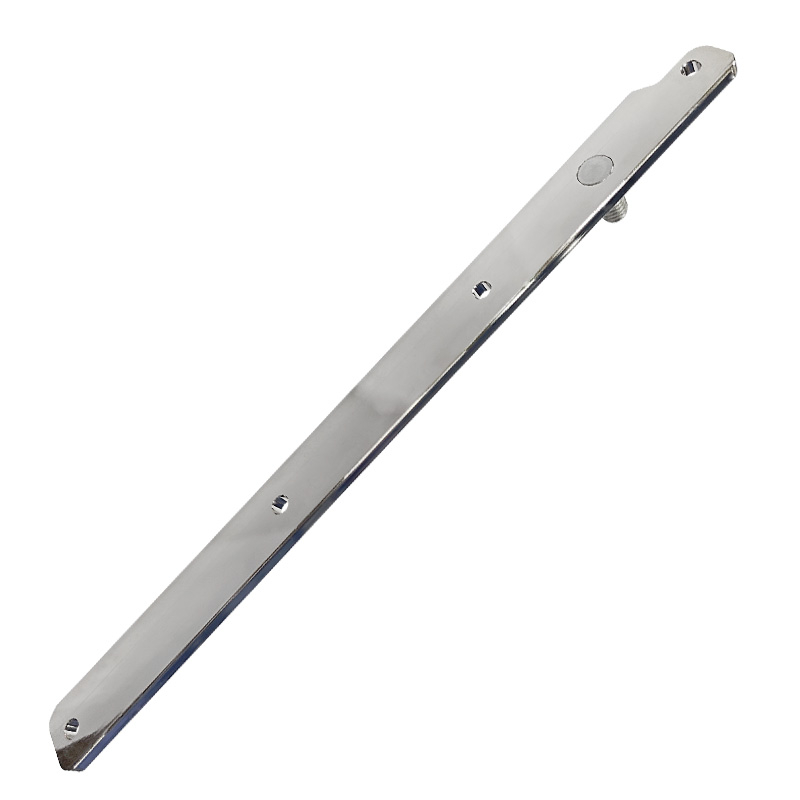
Derating factors are crucial adjustments made to the calculated ampacity of copper busbars to ensure safe and efficient operation in real-world applications. These factors account for various conditions that can affect the performance of electrical systems. By applying derating factors, engineers can avoid overheating and potential failures, ensuring reliability in diverse environments.
Understanding these factors is essential, as they help in designing systems that meet safety standards while maximizing efficiency. Without considering derating factors, the risk of electrical failures increases significantly, leading to costly downtime and safety hazards.
Several common derating factors should be considered when calculating the current carrying capacity of copper busbars:
Ambient temperature is one of the most significant derating factors. As temperatures rise, the ability of copper busbars to carry current safely decreases. For instance, a busbar rated for 1000 A at 30°C may only be able to carry 800 A at 50°C.
To adjust for temperature, you can use correction factors. Here’s a quick reference table for common temperature adjustments:
Ambient Temperature (°C) | Correction Factor |
30 | 1.0 |
40 | 0.9 |
50 | 0.8 |
60 | 0.7 |
The type of enclosure surrounding the busbar also impacts its ampacity. Enclosures can restrict airflow and heat dissipation, leading to increased temperatures. For example, a busbar installed in a sealed enclosure may require a derating factor of 0.85, while one in an open environment may not need any adjustments.
The orientation of the busbar and its proximity to other conductive materials can also affect its performance. Horizontal installations may allow for better heat dissipation compared to vertical ones. Additionally, if multiple busbars are placed close together, their combined heat can lead to further derating.
For instance, when busbars are installed in a parallel configuration, a derating factor of 0.75 may be applied to account for the additional heat generated by nearby conductors.
SZWANDAAN’s busbars are designed with these derating factors in mind. Their products often include specific guidelines for installation in various environments. For example, in industrial settings with high ambient temperatures, SZWANDAAN recommends applying a temperature correction factor and considering enclosure effects to ensure optimal performance.
Installation Scenario | Recommended Derating Factor |
Open Air | 1.0 |
Sealed Enclosure | 0.85 |
High Ambient Temperature (≥ 50°C) | 0.8 |
Close Proximity to Other Conductors | 0.75 |
By understanding and applying these essential derating factors, you can ensure that copper busbars operate safely and efficiently in a variety of applications. This approach not only enhances performance but also extends the lifespan of electrical systems.
Accurate ampacity calculations are crucial for safe copper busbar applications.
Understanding methods and factors affecting ampacity ensures optimal performance.
For specific applications, consulting professionals is essential.
If you need customized solutions, explore SZWANDAAN’s copper busbar products.
Our technical team is ready to assist you further.


