Shenzhen Wandanan Precision Technology Co., Ltd Info@szwandaancnc.com


Views: 0 Author: Site Editor Publish Time: 2026-04-01 Origin: Site


Stainless steel is notoriously difficult to process due to its unique metallurgical properties. Manufacturers face constant hurdles when shaping this resilient alloy. The high tensile strength heavily strains conventional cutting tools. Traditional mechanical cutting methods often introduce localized stress and edge micro-fractures. Physical punch presses lead to rapid tooling wear. This forces engineers to compromise on design complexity. Ultimately, physical tooling damages both part quality and project unit economics. We provide a technical evaluation framework for utilizing advanced optical technology to produce high-quality stainless steel components. You will discover how to assess return on investment efficiently. You will also learn to compare alternative fabrication methods accurately. We outline how to properly vet partners for your next manufacturing project. By understanding these core concepts, you can optimize production workflows. You will reduce material waste and accelerate your time to market.
Precision & Tolerances: Laser cutting routinely achieves tolerances of ±0.1mm (or ±0.015"), significantly reducing the need for secondary machining.
Cost Efficiency: Software-driven tight nesting and zero physical tooling eliminate prototype setup costs and maximize material yield.
Thermal Control: Focused fiber laser technology minimizes the Heat-Affected Zone (HAZ), preventing warping—even in thin-gauge sheet metal fabrication.
Process Superiority: Outperforms plasma in tolerance/edge finish and beats waterjet in speed and engraving capabilities.
Engineers consistently choose stainless steel for its remarkable corrosion resistance and aesthetic appeal. However, these same properties make it a formidable challenge on the production floor. The material science realities dictate how different grades react under intense physical stress. For instance, 300-series austenitic stainless steel offers unmatched rust resistance. Yet, it work-hardens rapidly during machining. The moment a physical blade strikes the metal, the targeted area becomes exceptionally hard. This sudden hardening ruins subsequent cutting passes. Conversely, 400-series martensitic and ferritic grades behave differently under thermal stress. They require careful handling to avoid altering their delicate crystalline structures.
These metallurgical traits create a severe tooling bottleneck. When processing high-tensile stainless alloys, physical punch presses suffer massive wear and tear. Cutting blades dull quickly. Production lines inevitably experience costly machine downtime. Operators must frequently halt operations to swap out degraded physical punches. You cannot achieve optimal unit economics when consumables drain your budget so aggressively.
The laser solution completely eliminates these mechanical hurdles. Optical laser processing relies on a non-contact methodology. It melts and vaporizes the material using highly focused beams paired with high-pressure assist gases. Because no physical tool ever touches the metal, work-hardening becomes irrelevant. For high-volume Sheet Metal Fabrication, adopting non-contact optical technology acts as a structural necessity rather than a mere upgrade.
Best Practice: Always specify the exact material grade (e.g., 304L vs 316) during the design phase, as lower carbon variations respond better to thermal processing.
Common Mistake: Attempting to use traditional stamping for low-volume runs of austenitic stainless. The rapid tooling degradation quickly erodes profit margins.
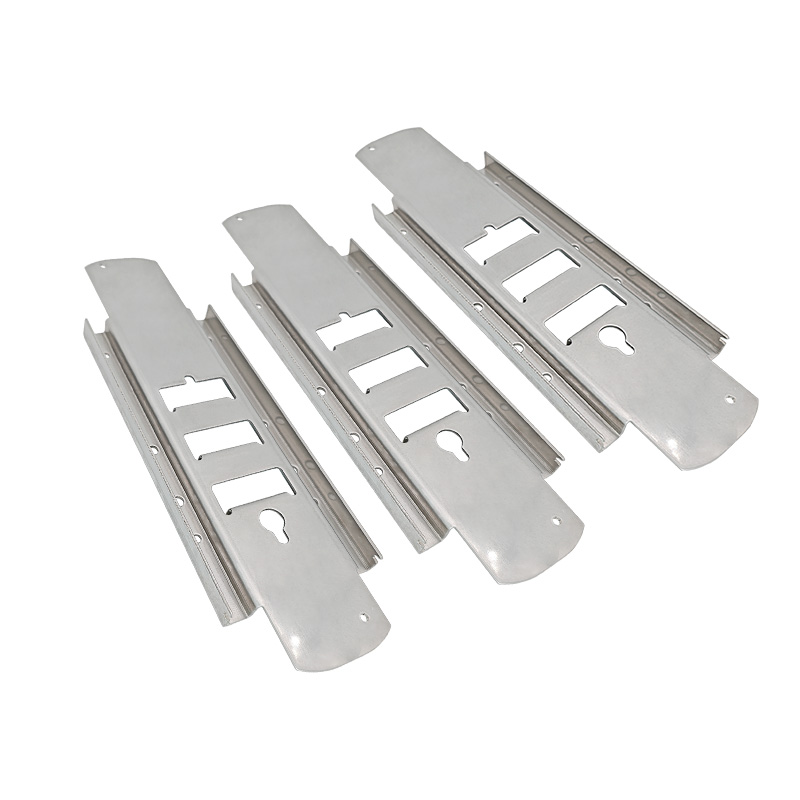
Transitioning from mechanical tools to directed energy beams transforms the manufacturing landscape. You gain immense flexibility while driving down downstream production friction. Let us examine the specific advantages driving this technological shift.
Mechanical blades impose strict physical limitations. They cannot easily navigate tight internal corners or punch micro-holes smaller than material thickness. Laser technology completely bypasses these constraints. You can cut razor-sharp internal angles, complex curves, and incredibly small perforations. Baseline tolerance expectations routinely sit at ±0.1mm. Such exceptional precision directly impacts downstream assembly. Components slide together seamlessly. You rarely encounter fitment issues on the welding line.
Edge quality heavily influences final product aesthetics and safety. High-energy fiber beams, when paired with a nitrogen assist gas, deliver pristine results. The nitrogen actively displaces oxygen inside the cut zone. This prevents unwanted oxidation. It leaves a clean, slag-free edge. Eliminating secondary deburring and hand-polishing processes directly reduces lead times. Your business outcomes improve because parts move straight from the cutting bed to the bending or shipping department.
Raw material costs dictate project viability. Modern laser systems utilize advanced CAD-driven nesting algorithms. The software arranges individual part profiles mere millimeters apart on a single master sheet. Tight nesting slashes raw material waste drastically. You extract maximum value from every single stainless steel plate purchased.
Traditional manufacturing requires physical dies. Modifying a die takes weeks and costs thousands of dollars. Laser cutting shifts the entire setup process into the digital realm. It incurs zero tooling costs. If a prototype fails a fit check, engineers simply adjust the vector file. Design files update instantly. This agility makes the leap from rapid prototype iterations to full volume production seamless.
Understanding the fundamental differences between optical resonators helps you choose the correct equipment for your application. The industry currently utilizes two primary formats.
Fiber optics represent the modern benchmark for processing metals. They generate a beam through active optical fibers doped with rare-earth elements. The technical edge lies in the focal diameter. A fiber laser routinely achieves a spot size as small as 300µm. This tiny focal point yields up to four times the energy density of older technologies. The commercial edge proves equally impressive. Fiber machines boast 4 to 6 times higher electrical efficiency. They operate without mirrors or moving parts inside the beam path. This grants them a massive maintenance-free lifespan, often exceeding 25,000 hours. Furthermore, fiber wavelengths absorb brilliantly into highly reflective surfaces like polished stainless steel.
CO2 lasers operate by exciting a gas mixture inside a glass tube. We acknowledge their massive historical impact on industrial fabrication. They remain useful for exceptionally thick metal plates or non-metal processing like wood and acrylic. However, their longer wavelength reflects heavily off bare stainless steel. They consume significantly more electricity. They also require frequent mirror alignments and gas replenishments. For modern thin-gauge and medium-gauge fabrication, fiber remains the definitively superior choice.
The table below summarizes the core differences between the two technologies:
Feature | Fiber Laser | CO2 Laser |
|---|---|---|
Wavelength | ~1.06 µm (High metal absorption) | ~10.6 µm (Prone to reflection) |
Energy Density | Up to 4x higher | Standard baseline |
Electrical Efficiency | Very High (4-6x better) | Low |
Maintenance Lifespan | ~25,000 hours | Requires frequent gas/mirror checks |
To fully evaluate manufacturing methods, we must position laser technology against other established profile cutting systems. Each method occupies a specific lane within heavy industry.
Plasma cutting relies on ionized gas and an electrical arc. It acts as an incredible tool for heavy infrastructure projects. Plasma's Lane: It suits extremely thick plates or weld-prep bevels perfectly. When you need to slice through three inches of structural steel quickly, plasma wins. Laser's Advantage: Plasma generates a massive Heat-Affected Zone (HAZ). If you apply plasma to thin sheet metal, severe thermal distortion and warping will occur. Laser maintains micro-precision. It keeps the surrounding metal cool enough to prevent warping.
Waterjet systems use ultra-high-pressure water mixed with abrasive garnet. Waterjet's Lane: It excels at avoiding heat entirely. Aerospace engineers rely on waterjets to cut ultra-thick, heat-sensitive titanium alloys without altering the temper. Laser's Advantage: Waterjet operations run notoriously slow. They are messy and expensive to maintain. Laser offers significantly faster processing speeds. Furthermore, lasers possess the unique ability to perform surface engraving and etching. You can cut a part profile and mark it with a QR code or serial number during the exact same machine cycle.
Here is a summary chart comparing these fundamental methodologies:
Process | Best Suited For | Primary Weakness | Baseline Tolerance |
|---|---|---|---|
Fiber Laser | Thin/medium stainless, complex shapes | Struggles on extremely thick blocks (>25mm) | ±0.1 mm |
Plasma | Very thick plates, rough structural work | Severe heat distortion on thin sheets | ±0.5 mm |
Waterjet | Heat-sensitive aerospace alloys | Slow speeds, high operational costs | ±0.1 mm to ±0.2 mm |
Sourcing metallic components requires diligent quality control. You must know how to spot manufacturing defects before approving a full production run. Use this buyer's troubleshooting framework to assess vendor sample quality accurately.
When you inspect the bottom edge of a component, it should feel relatively smooth. If you spot hardened droplets of metal (dross), the operator made an error. Underside dross indicates poor focal height calibration or excessive heat input. The vendor must optimize their machine feed rates. Alternatively, they need to increase the assist gas pressure to blow the molten metal away cleanly.
A perfectly cut part exhibits uniform edge straightness. Sometimes, you might notice one side of a corner looking sharp while the opposite side appears melted or rounded. This asymmetrical edge melting signals a misaligned assist gas nozzle. The gas jet hits the cut zone off-center. Proper machine calibration easily resolves this issue.
Stainless steel relies on a passive oxide layer to fight corrosion. High-quality cuts use high-pressure nitrogen to shield the molten metal. If you detect browning, yellowing, or a dark crust along the cut profile, the process failed. This discoloration points to severe oxygen contamination. It means the vendor used insufficient nitrogen shielding. Consequently, the edge lost its anti-corrosion properties and will inevitably rust.
Best Practice: Always request a "first article inspection" (FAI) report before authorizing a batch of thousands.
Common Mistake: Ignoring slight edge browning on aesthetic parts. Even minor discoloration indicates chemical compromise that leads to field failures.
Choosing the right manufacturing partner heavily influences project success. You must vet their facility, equipment, and internal protocols rigorously.
Begin by inspecting their hardware. Do they run modern multi-kilowatt fiber lasers? A 2kW machine might struggle to pierce thick plates efficiently, whereas a 10kW system handles tough gauges effortlessly. Next, look for integrated value-add services. Do they offer CNC bending, robotic welding, and powder coating under one roof? Consolidating your supply chain reduces shipping delays. It also centralizes accountability. When one facility handles the entire build, quality control improves dramatically.
Do not rely on verbal promises. Verify their official ISO certifications. ISO 9001 demonstrates a committed baseline for quality management systems. Furthermore, demand material traceability. Material Test Reports (MTRs) prove the origin and chemical makeup of the raw stainless steel. This documentation proves absolutely critical for medical devices, food-grade equipment, or aerospace applications. A reputable vendor supplies MTRs upon request without hesitation.
Once you identify a solid candidate, initiate the quoting process correctly. Define the ideal path to procurement. Submit clean STEP or DXF files to their engineering team. Request a thorough Design for Manufacturability (DFM) review. A skilled partner will suggest minor geometry tweaks to speed up production. Finally, ask for exact cycle-time quoting to ensure pricing transparency.
The manufacturing industry continuously demands higher precision and tighter margins. Relying on outdated mechanical tools for high-tensile alloys simply damages profitability.
Final Verdict on Efficiency: Stainless steel requires specialized optical equipment. The upfront technology investment yields a substantially lower cost-per-part through raw material efficiency.
Process Streamlining: Eradicating physical tooling delays and bypassing secondary finishing operations accelerates your entire go-to-market timeline.
Quality Assurance: By demanding nitrogen-assisted fiber technology, you preserve the vital anti-corrosive properties of the alloy.
Do not let legacy fabrication methods hold your product designs back. Take action today. Consolidate your CAD files, prepare your STEP models, and submit them for a professional Design for Manufacturability (DFM) feedback session. Consult directly with an engineering specialist regarding your specific production run to lock in exact cycle times and scale your operations confidently.
A: Standard industrial fiber lasers easily cut stainless steel up to 1 inch (25mm) thick. While modern multi-kilowatt systems (such as 20kW or 30kW machines) push these boundaries further, 25mm remains the typical sweet spot for maintaining excellent edge quality without sacrificing operational speed.
A: It depends on the assist gas. Standard ablation with oxygen introduces heat and oxidation, destroying the passive oxide layer. However, high-quality fabrication uses high-pressure nitrogen gas. Nitrogen displaces ambient oxygen during the cut, preventing edge oxidation and perfectly preserving the material's natural rust resistance.
A: The decision depends on the exact volume crossover point. Physical stamping wins heavily when producing millions of identical units. Conversely, laser cutting easily wins in low-to-mid volumes. Lasers require zero tooling investments, making them infinitely superior for highly complex designs or frequently changing product iterations.


