Shenzhen Wandanan Precision Technology Co., Ltd Info@szwandaancnc.com


Views: 0 Author: Site Editor Publish Time: 2025-06-11 Origin: Site


Motor shafts are essential in energy applications—wind turbines, photovoltaic (PV) trackers, hybrid generator sets, energy storage system (ESS) UPS units, and high‐pressure electric pumps. They must transmit torque, support rotating components, and maintain precise alignment under harsh conditions: extreme temperatures, high pressures, corrosive fluids, particulate contamination, and vibration. A substandard shaft can lead to catastrophic failures, unplanned downtime, and high repair costs. To meet these demands, shafts require careful material selection, precise heat treatment, rigorous machining, and advanced surface treatments.
Wind turbine shafts must handle enormous bending moments and torsional loads. A 5 MW turbine’s rotor can exceed 80 tons, with generator torque up to 4,000 kNm. Offshore installations add corrosive salt spray and constant humidity.
High Strength and Fatigue Resistance: Shafts endure combined bending and torsion from wind forces and power generation, requiring materials with high yield and fatigue limits.
Corrosion Resistance: Offshore turbines require alloys that resist chloride‐induced pitting and stress‐corrosion cracking.
Dimensional Accuracy: Precise concentricity (often < 0.02 mm total indicated runout) and smooth surfaces prevent imbalance and premature bearing failure.
40CrNiMo Steel (AISI 4340): Offers tensile strengths of 1,200–1,400 MPa and good toughness down to –40 °C. Its chemistry (≈ 0.40 % C, 1.65 % Cr, 1.80 % Ni, 0.25 % Mo) provides deep hardenability.
Carburizing and Nitriding:
Carburizing: 900–930 °C in carbon atmosphere yields a 1.0–1.5 mm hard case (HRC 58–62) over a tough core (HRC 30–35).
Nitriding: 500–550 °C introduces a 0.2–0.4 mm nitride layer (hardness > 1,000 HV) without quenching distortion, enhancing wear resistance and fatigue life.
PVD Coating (TiN or CrN): A 2–5 μm hard ceramic layer improves corrosion resistance and wear protection during assembly.
Shot Peening: Imparts compressive residual stresses to 0.4 mm depth, doubling fatigue life near high‐stress fillets.
Replacing 42CrMo shafts with 40CrNiMo, dual‐treated (carburized + nitrided), then PVD‐coated and shot peened, improved fatigue life by 25 %. Salt spray testing (ASTM B117) showed negligible pitting, and runout distortion stayed under 0.05 mm.
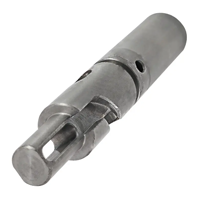
PV trackers cycle tens of thousands of times per year, operating in –40 °C to +85 °C. Shafts must resist low‐torque, high‐cycle fatigue and wide temperature swings.
High Fatigue Endurance: Hundreds of thousands of cycles at low stress amplitudes demand alloys with excellent S‐N curve performance.
Ductility Across Temperature Extremes: Shafts must remain tough at subzero temperatures and maintain strength at high ambient heat.
Corrosion Resistance: Outdoor exposure to humidity, dust, and occasional rain requires protective surface treatments.
40Cr Steel (AISI 5140): Quenched and tempered (840 °C quench, 400 °C temper) yields HRC 28–32, tensile strength 850–1,000 MPa, and toughness at –50 °C. Fatigue limit is 350–400 MPa at 10⁷ cycles.
Shot Peening: Adds compressive stresses up to –700 MPa at 0.2 mm depth, boosting fatigue life by 30 %.
Epoxy Powder Coating (50 μm): UV‐stabilized, withstands –40 °C to +120 °C, preventing corrosion in desert and coastal environments.
A 200 MW solar plant in Arizona switched to 40Cr tempered at 380 °C plus shot peening and epoxy coating. After three years (–35 °C to +75 °C), no surface cracks or coating failures occurred—a 100 % improvement over earlier failures caused by humidity‐induced micro‐pitting.
ESS units and hybrid generator sets switch between battery drive and diesel generation. Shafts face multi‐mode loading: steady motor operation, sudden torque spikes during transitions, and vibrations from combustion engines.
Low Vibration and Precise Balance: Rotating assemblies (rotor, flywheel, coupling) must be balanced within 0.1 g·mm to avoid bearing wear and vibration trips.
Torque Impact Resistance: During mode switching, shafts encounter torque surges exceeding 200 % of rated torque; materials must resist plastic deformation.
High Cycle Fatigue Performance: UPS shafts may experience hundreds of transitions daily—over a million cycles annually.
42CrMo Steel (AISI 4140): Quenched at 860 °C and tempered at 550 °C yielding core strength of 1,100 MPa, hard-ness HRC 30–35.
Precision Machining:
Rough machine to within 0.5 mm before heat treatment to minimize distortion.
Quench and temper, then rough grind to within 0.1 mm of final diameter.
Final grind to ± 0.005 mm tolerance, surface finish Ra ≤ 0.4 μm.
Shot Peening: Imparts –800 MPa compressive stress to 0.2 mm depth, mitigating crack initiation in high‐stress zones.
Dynamic Balancing: Balance assembly to < 0.1 g·mm at 3,000 RPM to minimize vibration.
A German ESS implemented a 42CrMo shaft (280 mm journal diameter) with quench‐temper, shot peening, and balancing. After 24 months with 150–200 grid‐ride events annually, vibration remained < 2 mm/s, and no shaft faults occurred—confirming the importance of precision machining and balancing.
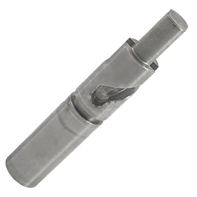
Electric pumps in power plant cooling, boiler feedwater, and water treatment face cyclical pressures up to 20 MPa, water hammer, and corrosive fluids.
Corrosion Resistance: Shafts must resist pitting and stress‐corrosion cracking from chlorinated or low‐pH water.
High Surface Finish and Straightness: Bearings and seals rely on shaft finishes Ra ≤ 0.2 μm and straightness < 0.03 mm/m to prevent seal wear and leaks.
Fatigue Resistance Under Transients: Shafts endure pressure spikes to 25 MPa—endurance limits in bending and torsion must exceed 600 MPa.
316L Stainless Steel: Excellent chloride resistance and mechanical stability up to 450 °C; resists pitting in neutral or slightly acidic water.
Low‐Temperature Nitriding: 450–500 °C diffuses nitrogen into the austenite, forming a hard “S‐layer” (~10–20 μm) with hardness > 700 HV, improving wear resistance and fatigue life while preserving corrosion resistance.
Electrochemical Coloring: Adds an oxide film sealing micro‐pits from machining, enhancing corrosion protection, especially in nuclear or high‐purity water circuits.
Shot Peening: Imparts –500 MPa compressive stress to 0.2 mm depth, delaying fatigue crack initiation under pressure transients.
Precision Grinding: Achieve ± 0.008 mm diametric tolerance and Ra ≤ 0.2 μm finish for bearings and seals.
A nuclear station replaced corroded shafts with 316L steel, low‐temperature nitrided, electrochemically colored, and shot peened. After three years under 15 MPa service, shafts showed no pitting or fatigue cracks, and seals remained intact—proving the treatment’s effectiveness.
Motor shafts underpin the reliable operation of energy equipment. Across wind turbines, PV trackers, ESS UPS systems, and high‐pressure pumps, shaft failures can cause unplanned downtime, safety hazards, and costly repairs. Key practices include:
Material Selection:
Wind Turbines: 40CrNiMo with carburizing, nitriding, and PVD coating for offshore corrosion and fatigue.
PV Trackers: 40Cr with low‐temperature tempering, shot peening, and UV‐resistant epoxy for extreme temperature cycles.
ESS/UPS & Hybrid Generators: 42CrMo quenched and tempered, precision‐machined, shot peened, and dynamically balanced to < 0.1 g·mm.
Electric Pumps: 316L with low‐temperature nitriding, electrochemical coloring, shot peening, and Ra ≤ 0.2 μm grinding for water‐resistant, fatigue‐proof performance.
Heat Treatment and Surface Enhancement:
Carburizing + Nitriding for high torques and offshore corrosion.
Low‐Temperature Nitriding for mild corrosion and high fatigue life.
Shot Peening to induce compressive stresses.
PVD/Electrochemical Coatings to seal surfaces and resist wear.
Precision Machining and Balancing:
Preheat‐treatment Machining with 0.5 mm finish allowance to minimize distortion.
Final Grinding to ± 0.005 mm tolerance and Ra ≤ 0.4 μm (or ≤ 0.2 μm for pump shafts).
Dynamic Balancing at operating speed to < 0.1 g·mm unbalance.
Quality Control and Testing
CMM and Laser Measurement for concentricity, straightness, and runout.
Fatigue and Corrosion Testing on sample shafts before full‐scale production.
Regular In‐Field Inspections of vibration, runout, and surface condition.
Shenzhen Wandaan Precision Technology Co., Ltd. offers turnkey solutions to meet these requirements:
Material Validation: Spectrochemical analysis of raw steel (40CrNiMo, 42CrMo, 40Cr, 316L).
Customized Heat Treatment: Carburizing, nitriding, quench‐tempering, PVD coating, and stress relief.
Precision Machining: CNC turning, grinding, and finishing to tight tolerances (± 0.01 mm) with Ra ≤ 0.2 μm.
Surface Enhancement: Shot peening, electrochemical coloring, and plating for corrosion and wear resistance.
Quality Assurance: In‐line laser measurement, CMM inspection, dynamic balancing, and fatigue testing.
Field Support: On‐site alignment checks, condition monitoring, and maintenance guidance.
Recommendations:
Engage Early: Collaborate with Wandaan's engineers during design to match shaft material and treatment to specific load cases and environments.
Validate with Testing: Provide sample shafts for accelerated fatigue and corrosion tests under simulated service conditions.
Implement Preventive Maintenance: Establish inspection intervals for vibration, runout, and surface integrity to catch degradation early.
By integrating these best practices and leveraging Shenzhen Wandaan’s expertise, energy equipment manufacturers and operators can deploy motor shafts that deliver years of reliable, maintenance‐friendly performance—ensuring energy systems remain efficient, safe, and cost‐effective.


