Shenzhen Wandanan Precision Technology Co., Ltd Info@szwandaancnc.com


 |


| Quantity: | |
|---|---|
Custom Anodized Aluminum Heatsink
Anodized aluminum heatsink refers to an aluminum heat sink that has undergone anodizing treatment. It is used in electronic devices to efficiently dissipate and dissipate heat, while also possessing enhanced corrosion resistance, wear resistance, and surface aesthetics.
1. Applications of Anodized Aluminum Heatsinks
Anodized aluminum heatsinks are deployed across a broad spectrum of industries where reliable thermal management is critical:
Consumer Electronics: CPUs, GPUs, SSDs, power amplifiers, routers, and set-top boxes. The black anodized finish is particularly favored in gaming hardware and high-end audio equipment for its sleek aesthetic alongside thermal benefits.
LED Heatsink: High-power LED modules and streetlights depend heavily on anodized heatsinks. The enhanced emissivity helps dissipate heat passively, extending LED lifespan and maintaining color stability.
Automotive & EV Systems: On-board chargers, DC-DC converters, motor controllers, and battery management systems use anodized heatsinks for corrosion resistance underhood-level temperature cycling and humidity.
Telecommunications: 5G base stations, RF power amplifiers, and satellite communication equipment demand lightweight, corrosion-resistant cooling that requires zero maintenance in remote outdoor installations.
Industrial & Power Electronics: IGBT modules, inverters, servo drives, and welding equipment rely on anodized aluminum for both high-voltage electrical isolation (the oxide layer acts as a dielectric) and sustained heat dissipation.
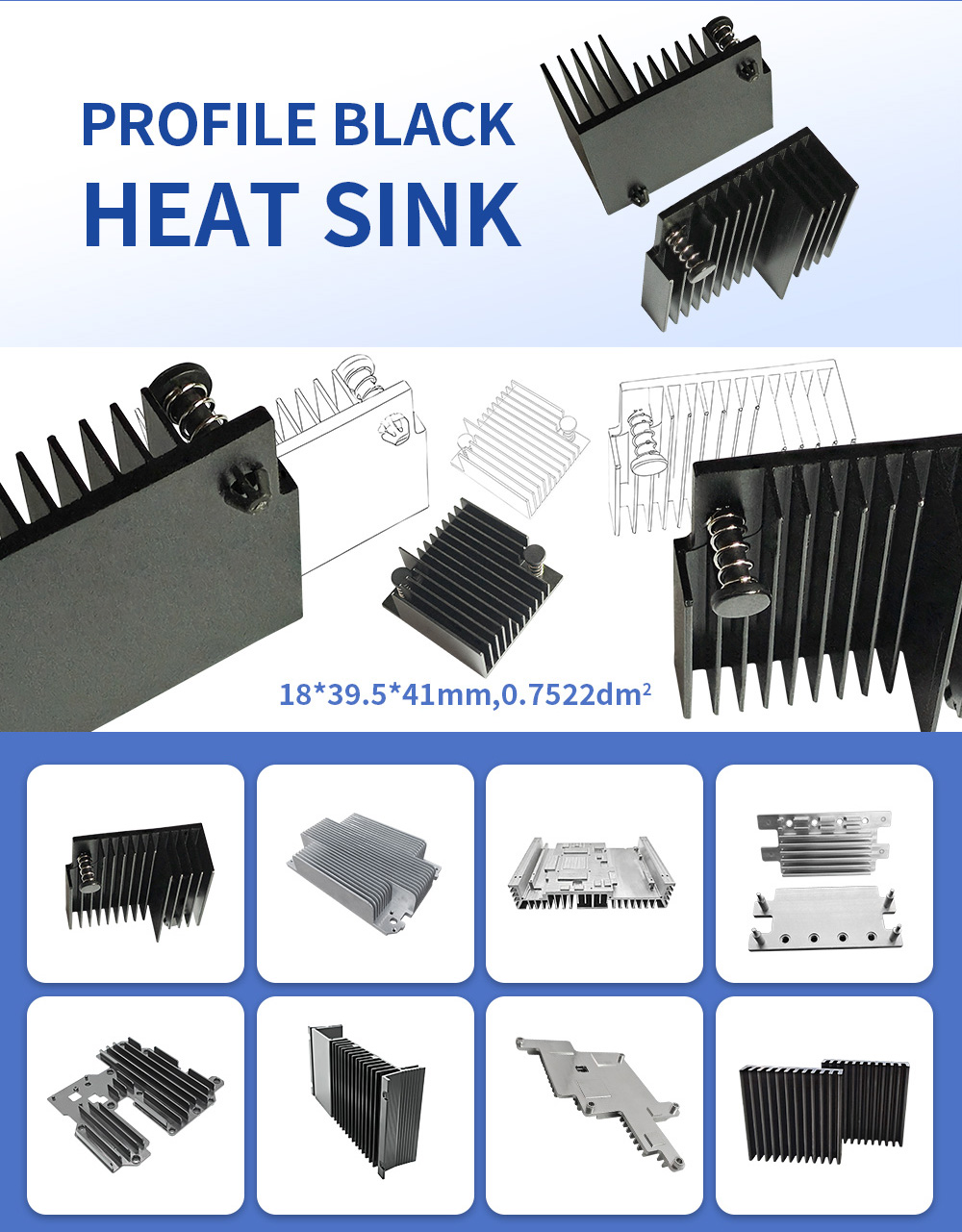
2. Manufacturing Process
Heatsink Fabrication: The raw aluminum heatsink is first formed through one or more of the following methods:
Extrusion heatsink: The most common method, where heated aluminum billets (typically 6063-T5alloy) are forced through a shaped die to create complex fin profiles. This yields precise, repeatable geometries at high volume.
Die Casting: Suitable for intricate, net-shape parts with thin, dense fins. Alloys such asA380 or ADC12 are commonly used.
CNC Machining: Used for prototyping, small-batch production, or adding precise mounting features to extruded blanks.


