Shenzhen Wandaan Precision Technology Co., Ltd Info@szwandaancnc.com


 |


| Quantity: | |
|---|---|
Negative Aluminum Busbar
Aluminum busbars have emerged as a cornerstone component in modern electrical systems, offering an exceptional balance of lightweight design, cost-effectiveness, and reliable conductivity. As industries worldwide push toward electrification and energy efficiency, aluminum busbars are increasingly replacing traditional copper conductors across a wide range of applications. Wanda-an aluminum busbar, plays a role in battery systems, expands into other industrial and energy applications, and provides practical strategies for protecting aluminum busbars to maximize their service life.
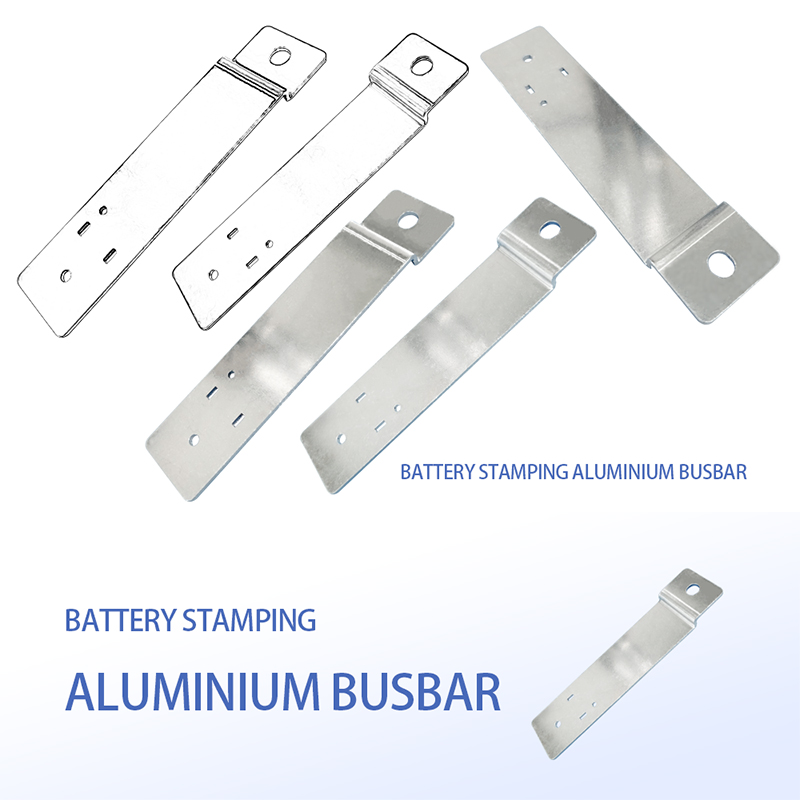
Applications of Aluminum Busbars in Battery Systems
Aluminum busbars play an indispensable role in battery packs, particularly in the electric vehicle and energy storage sectors. Their primary function is to serve as conductive connectors that carry high currents between individual cells, modules, and external terminals.
Inside a battery pack, aluminum busbars are used to connect individual cells in series or parallel configurations, forming a unified module. They also bridge connections between different modules and link the entire battery assembly to high-voltage connectors. Wanda-an has always been committed to producing higher-quality aluminum busbars.
Flexible Aluminum Busbar: In applications where vibration, thermal expansion, or assembly tolerances are concerns, flexible aluminum busbars made from laminated thin aluminum sheets are widely adopted. These soft connections absorb mechanical stress and accommodate minor misalignments during installation, ensuring stable electrical performance over the battery's lifetime. Compared to copper flexible connectors, aluminum versions offer substantial cost savings while maintaining adequate conductivity.
Integrated Busbars in Cell Contacting Systems: Modern battery modules often incorporate aluminum busbars directly into the cell contacting system, where they are welded to cell terminals. High-strength 6-series aluminum alloys, such as 6061-T6, are frequently chosen for these applications because their superior mechanical properties help prevent deformation and cold solder joints during the welding process.
Renewable Energy Systems: In solar photovoltaic installations and wind power systems, aluminum busbars serve as the backbone for current collection and transmission. They connect inverter outputs, combiner boxes, and transformer inputs, providing a lightweight and corrosion-resistant solution suitable for outdoor and harsh environmental conditions.
Industrial Equipment and Machinery: Aluminum busbars are found in industrial motor control centers, uninterruptible power supplies (UPS), and heavy machinery where reliable high-current transmission is required. Their excellent thermal dissipation properties help manage heat buildup during continuous operation.
Energy Storage Systems: Beyond EV batteries, large-scale stationary energy storage systems rely on aluminum busbars to interconnect battery racks and containers. The combination of light weight, low cost, and good conductivity makes aluminum the material of choice for utility-scale storage projects, where total system weight and budget are critical considerations.
| Material | 1350 (electrical grade, per ASTM B236); 1-series (1060, 1370) for high conductivity; 6-series (6061, 6063, 6101) for higher mechanical strength and creep resistance. |
| Density | ~2.7 g/cm³ --Roughly one-third that of copper, enabling significant weight reduction in battery packs. |
| Thermal Expansion | Higher than copper; requires spring-type conical washers or flexible connection designs in bolted joints to accommodate thermal cycling and prevent loosening. |
| Surface Treatment | Nickel plating, tin plating, silver plating, or micro-arc oxidation |
| Connection | Ultrasonic welding, friction stir welding, bolted joints with spring conical washers |
| Insulation | Typically covered with heat-shrink sleeving, epoxy powder coating, or insulating tape to prevent short circuits and provide additional environmental protection. |
How to Protect Aluminum Busbars and Extend Their Service Life
Despite their many advantages, aluminum busbars face challenges related to oxidation, galvanic corrosion, and mechanical degradation. Implementing proper protection strategies is essential for ensuring long-term reliability.
Surface Treatment and Plating: One of the most effective protection methods is surface plating. Tin plating, nickel plating, and silver plating are commonly applied to aluminum busbars to enhance corrosion resistance and improve contact conductivity. Nickel plating, in particular, creates a durable barrier that withstands exposure to electrolyte vapors and condensation in battery pack environments. The plating process also reduces contact resistance at connection points, minimizing energy loss and localized heating.
Micro-Arc Oxidation: An advanced surface treatment technique, micro-arc oxidation forms a dense, ceramic-like aluminum oxide layer on the busbar surface. This layer provides exceptional corrosion resistance, wear resistance, and electrical insulation. When combined with a polymer shielding layer, the busbar gains enhanced protection against moisture, chemicals, and mechanical abrasion, significantly extending its operational life.
Insulation Coating and Sleeving: In battery packs and confined electrical enclosures, aluminum busbars are often covered with insulating materials such as heat-shrink tubing, epoxy powder coating, or insulating tapes. These coatings prevent accidental short circuits, protect against environmental contaminants, and provide an additional barrier against oxidation. In high-voltage sections where heat dissipation is critical, selective insulation that leaves certain areas exposed may be employed.
Material Selection and Alloy Optimization: Choosing the right aluminum alloy for the application is a fundamental step in ensuring durability. High-purity 1-series aluminum (e.g., 1060, 1070, 1370) offers the best conductivity for general use, while 6-series alloys (e.g., 6061, 6063, 6101) provide higher mechanical strength and better creep resistance for structural and high-stress applications. For battery busbars, specifically, alloys with controlled impurity levels and optimized magnesium-silicon ratios deliver an ideal balance of conductivity, strength, and formability.
Why choose Wanda-an aluminum busbar?
Wanda-an aluminum busbar has been widely used in battery systems, power distribution, renewable energy, and industry, and is a universal, cost-effective, and high-performance conductor. Their lightweight characteristics directly support the global push for energy efficiency and vehicle electrification. By implementing appropriate surface treatment, adopting advanced composite material technology, using appropriate connection methods, and maintaining vigilant temperature monitoring, the service life of aluminum busbars can be significantly extended. With the continuous advancement of manufacturing technology and materials science, aluminum busbars will undoubtedly play a greater role in shaping the future of global electrical and energy systems. Contact us today if you have any aluminum busbar project.


